Archive for the ‘Cast Iron Cookware’ Category

What’s the big deal with cast iron pots and things? Keep reading and I’ll tell you all about it.
Hello, again, Dear Readers:
It’s been a minute. Since my last post, we’ve had freezing winter weather but no snow, James has been sick with a throat bug and fever, (I didn’t get sick, thank heavens) plus there have been some other things going on that I won’t bother y’all with. Note that the formatting is a bit wonky today, and I can’t seem to get it back to good, so I give up.
Thankfully, social media being what it is, my Instagram feed was loaded with “winter tips” that we took to heart. But the socks on the windshield wipers (to keep them from freezing onto the glass) were met with a skeptical smile. Why socks? We don’t have pool noodles lying around. Suffice to say blogging fell behind again. Getting ready for this year’s big freeze took a lot out of us, but now we’re having an early “spring” week, complete with rain and temps above 75F. Next week we’re looking at 80F in the absence of another cold front.
There is the matter of Sam the Mastador, who has been here nearly two years:

He’s guilty of multiple occurrences of all these crimes. (Made with Canva.)
He migrated over when a relative couldn’t handle him anymore once he hit 50 pounds, and now he’s about 80. If Sam were human he would have been arrested, tried and convicted multiple times over. I still have to share my dinner with this beast:

Doesn’t matter what it is, he wants some, until he doesn’t.
So, life is just something new every day at the Casa de Rurale.
Knife Sharpening Updates
After publishing the last post, I sharpened another one of my years-old Target-bought knives to cut tomatoes. This was a smaller knife, about 8 inches long with a full blade. I was able to cut them into perfectly small dice for some Friday night tacos.
Aunt Ruth also realized that it was time for a knife sharpener, so she’s shopping for one for her own kitchen. Glad I could help with that.
If you haven’t started sharpening your knives yet, now’s a good time to start.
More Foodie Gifts
Once again, I’m piggy-backing on my Gifts For Foodies blog. Because I thought cast iron cookware was a good topic, I decided to roll with it. So did Aunt Ruth, who wrote back that she owns two cast iron pieces. One, she says, “makes the best corn bread you can imagine.” Plus, it cooks everything perfectly, she says, and frying is also best in cast iron.
I know Aunt Ruth is right, because James likes his cornbread in cast iron, too. Somewhere, we have one of those cornbread-specific pans that was gifted to us a few years ago, similar to this one.

This picture is just for illustration. (Source: Amazon.)
I haven’t tried the gluten-free/vegan cornbread from Erin McKenna’s first book in cast iron—yet. But It’s still one of my favorite recipes and I still make it occasionally. Yes, James turns his nose up at it, too.
Heart Shaped (Enameled) Cast Iron
I did manage to get my paws on one of the 2-quart heart-shaped enamel cast iron pots in a recent Aldi Finds drop:

Isn’t it GORGEOUS???
We got there right when the store opened so I was able to easily get one. As always, James does not understand.

So clean and new.
On my last trip there over the weekend, there were two pink ones on the shelf, plus the mini ones. But I have always wanted a red one, so that’s what I bought. Plus, I don’t like pink.

This pot is rather heavy, too.
Finally, I have my own. Note: hand wash only.
If you’re not familiar with this culinary confection, it’s a dupe of Le Creuset’s Traditional Heart Cocotte that runs $230 but sells for $161 right now. That’s because Valentine’s Day is coming up. There are other versions available year-round on Amazon, but they’re way more than the $20 this Crofton model cost. Yes, I’ve already used it for a quick dinner using this recipe from Sara Moulton. For ours, I used cheddar cheese and some leftover cooked chicken, since that’s what I had handy. No complaints, but I did have to soak the pot because of all the melted cheese. . .don’t ask.
Disclosure that this is an AI-assisted post with some live Amazon affiliate links (like that one.)
Background on Cast Iron
Here’s where my BFF helps me out, and it’s also where today’s topic came from.
Cast iron pots and pans have a long history that dates to ancient China around the 5th century BC, when early forms of cast iron cookware were developed during the Zhou Dynasty. The technique spread westward over time, reaching Europe by the Middle Ages. In the 1700s, advancements in casting methods in England allowed cookware to be made thinner, smoother, and more consistent. Cast iron became popular because it was strong, held heat well, and could be produced at a lower cost than many other metals. These qualities made it useful in both home kitchens and large communal settings.
In the United States, cast iron cookware became widespread in the 18th and 19th centuries as foundries began mass-producing pots, pans, and Dutch ovens. Companies like Griswold and Wagner helped refine the craft, producing lighter, smoother pieces that are still prized today.
Cast iron was especially important in early American households because it worked well over open fires and wood stoves. Although its popularity declined with the rise of lighter, coated cookware in the mid-20th century, cast iron has seen a strong revival in recent decades due to its durability, cooking performance, and connection to traditional cooking methods.
Why Cast Iron’s Appeal Endures
Frequently, cast iron cookware is handed down from parents, grandparents, aunts and uncles, and others. But even with all that generational descending, cast iron still sells well new. Lodge is the top producer of cast iron cookware in the US, although there is a wide variety from multiple manufacturers available in stores and online.

Source: Amazon.com
So why is cast iron cookware such a desirable item by cooks and gourmets? There are several reasons.
Excellent Heat Retention
Cast iron holds heat very well, so it stays hot even when you add food. That helps with even cooking and maintaining temperature.
Versatile Cooking
You can use cast iron pots on:
- Stovetops—gas, electric, induction, but not glass top (keep reading)
- In the oven
- Over a campfire
This makes them great for braising, roasting, frying, baking, and simmering.
Durable and Long-Lasting
Cast iron cookware can last for generations if cared for properly. It is heavy and built to withstand high heat and daily use.
Naturally Non-Stick (When Seasoned)
With proper seasoning (a layer of baked-on oil), cast iron develops a natural non-stick surface that improves over time without synthetic coatings like Teflon.
Adds Iron to Your Food
Cooking in cast iron can increase the iron content of your food. This is especially beneficial for people with iron deficiency.
Great for Slow Cooking
Cast iron distributes heat slowly and evenly, making it ideal for soups, stews, and other long-simmering dishes.
Excellent Browning and Searing
Because it holds high heat so well, cast iron is ideal for searing meats and achieving rich browning and caramelization.
Cost-Effective Over Time
While some pieces can be pricey upfront, cast iron’s longevity makes it a good investment compared with cookware that wears out quickly.
Easy to Clean (With Regular Maintenance)
If you maintain the seasoning layer:
- Food releases easily
- Scrubbing is simple
- You don’t need harsh detergents
Eco-Friendly
Cast iron cookware doesn’t use synthetic non-stick coatings that wear off, flake off into your food, and eventually need replacement. Its long life means less waste.
Quick Care Tips:
It’s all about taking proper care of your cast iron to make it last your lifetime or longer. Lodge Cast Iron pieces are preseasoned, and they just need to be maintained to retain their regular non-stick capabilities.
- Dry thoroughly after washing
- Rub with a thin layer of oil to maintain seasoning
- Avoid soaking or using soap often (for seasoned pans)
But if you find yourself with a rusty, neglected piece of cast iron, don’t toss it. Lodge Cast Iron’s website has all kinds of information for caring for your cast iron as well as restoring a rusted-out piece. I’ve done it myself, it just takes a little time and patience, preferably on a cold day so you don’t feel bad turning on the oven to high heat.
A Variety Of Sizes And Types
Cast iron pieces come in a wide variety of sizes and types. Remember a few years ago when I made this tiny little chocolate cake for us? I used two small cast-iron Dutch ovens to make it.

Aren’t they cute?
I bought those little pots years ago at Bed, Bath and Beyond when it was a store, along with the two tiny cast iron frying pans.

You can toast a small amount of nuts in one of these. They fit in a toaster oven, too.
The plan was to use them in the countertop oven for baked eggs and other similar applications, but not so much on the stovetop. I saw Ina Garten, The Barefoot Contessa make these skillet brownies in them once, and bought them whenever I found them just for that reason. I don’t remember if I’ve ever used the skillets, but I don’t want to toss them out, either, because we can use them on the camp stove if there’s a power outage (or we need them for self-defense.)
Most people have a ten- or twelve-inch cast-iron pot, or maybe a set like I have with 8, 10, and 12-inch skillets. There are also double-burner grills and griddles to use on stove tops, outdoor grills or even campfires.

This one is from Sweden, but not IKEA. (Source: Amazon.com.)
And let’s face it—what kitchen couldn’t benefit from a piece like this?

Or this magnificent handmade heirloom piece:

Source: Amazon.com
And of course, this one looks good on the wall and while cooking:

Source: LodgeCastIron.com
Yes, Lodge makes that lovely Texas skillet, along with several other states in their American Road Trip series. (On my list of many things I need.) There’s no skillet for Louisiana, but that’s OK. Nobody’s ever heard of “Louisiana Toast.”
Warning: Cast Iron Is Not Good For Glass-Top Stoves
As good as cast iron is, there may be times when you might choose something else.
A few years ago, James bought a new stove and refrigerator for the house. The same Frigidaire model is still available. We both like using it, even though it’s been a learning curve. (The oven could sure use a cleaning.)
Once we plugged it in, we continued to use the cast iron skillet on the glass top until I discovered that we shouldn’t. Either I saw it in the owner’s manual or somewhere online. Immediately, I stopped using them and told James about this issue. His comment: “well, who decided that we shouldn’t use cast iron on this stove?” My response: “well, the manufacturer for one thing.” So begrudgingly, I put away the cast iron cookware, and we began using some of my stainless-steel pieces on the burners.
You can still use your cast iron pots, pans, and other pieces in the oven for cornbread and other things. Since a frittata is cooked partly on the stove top and partly in the oven. . .exercise extreme care here if you decide to use a cast iron skillet on the glass stove top. You can also transfer the frittata from a stainless-steel skillet into a cast iron skillet to put into the oven. Again, exercise extreme care here, because you have the potential for serious burns.
Best Cookware for Glass Top Stoves
What types of cookware work on glass stoves? I asked my BFF (ChatGPT) about that, too. This is what s/he told me.
Stainless Steel (Best Overall Choice)
Why it works:
- Smooth, flat bottoms protect the glass
- Lightweight compared to cast iron
- Heats evenly, especially tri-ply or multi-ply
Look for:
- Fully clad or tri-ply construction
- Flat, magnetic base if you also want induction compatibility
Aluminum (Hard-Anodized Is Best)
Why it works:
- Very lightweight
- Excellent heat conductivity
- Easy to control temperature
Caution:
- Avoid bare aluminum because it can leave marks
- Hard-anodized versions are more durable and glass-safe
Enameled Cast Iron (With Extreme Care)
Why it works:
- Smooth enamel bottom is safer than raw cast iron
- Provides similar heat retention benefits
Use carefully:
- Do not slide the pot or pan
- Avoid very large or heavy pieces, such as big Dutch ovens or larger skillets
- Place gently on the cooktop
Even though it feels strong, a glass topped stove does have a certain amount of delicacy to it. The last thing you want to do is risk damaging the top.
Carbon Steel (Smooth Bottom Only)
Why it works:
- Lighter than cast iron
- Heats quickly and evenly
- Can become naturally non-stick
Best for:
- Flat-bottom carbon steel pans
- Smaller to medium sizes
Ceramic-Coated Cookware
Why it works:
- Smooth, non-scratch surface
- Easy to clean
- Lightweight
Downside:
- Coating wears out faster than stainless steel
- Not ideal for very high heat
Cookware to Avoid Using On Glass Top Stoves
Raw Cast Iron
- It’s very heavy
- Rough bottoms scratch the glass top
- There is a high risk of damage
Copper (Unlined Bottoms)
- Can scratch the surface
- May leave residue or discoloration
Warped or Uneven Cookware
- Causes poor heat transfer
- Can crack the glass over time
Right now, I have a 12-inch square grill pan that I’m probably going to throw away or donate because the warped bottom makes it difficult to use on the very flat glass top. I did use it on the previous electric coil-burner stove, But still, it wobbled, so I was always concerned that it would move around or slide off onto the floor. Time to toss it.
Quick Buying Tips
- Always choose cookware with perfectly flat bottoms
- Lift cookware instead of sliding
- Match the pan size to burner size
- Avoid dragging anything across the surface
For everyday use on a glass top stove, stainless steel or hard-anodized aluminum is your safest and most reliable option. Enameled cast iron works if handled carefully, but raw cast iron is best avoided.
Additional: Pot Lid Warning For Glass Top Stoves
No matter what type of pot you use on a glass-topped stove, never, and I mean, NEVER put a hot pot lid flat on the glass stove top when you’re cooking. You could shatter the stove top completely.
The hot lid on the cold glass surface creates a strong vacuum that you can’t release. It’s like the suction cup you use to hang something in your bathroom shower stall or tub area. Unlike the rubber suction cup, there’s heat involved. If it happens, there’s no way to break that suction, and the glass top will shatter in the process from the heat expanding the cold glass. It’s not pretty, and a very expensive repair or replacement.
Thankfully, I read about this before it happened to us. James thought I was absurd until he realized I wasn’t kidding. If we do remove a pot lid and need to put it down, we put it on the stove’s edge. That way, the lid is not flush on the surface and there’s a space between the two. This leaves enough room for the lid’s heat to dissipate with no chance of a vacuum developing.
Nobody tells you this stuff. Thank heavens for the Internet.
The Cast Iron Bottom Line
If you’re in the market for some new cookware, cast iron may be just what you need. Depending on your stove, kitchen and cooking needs, cast iron is versatile and made for whatever you can toss in. They’re easy to use and maintain and will last for many years.
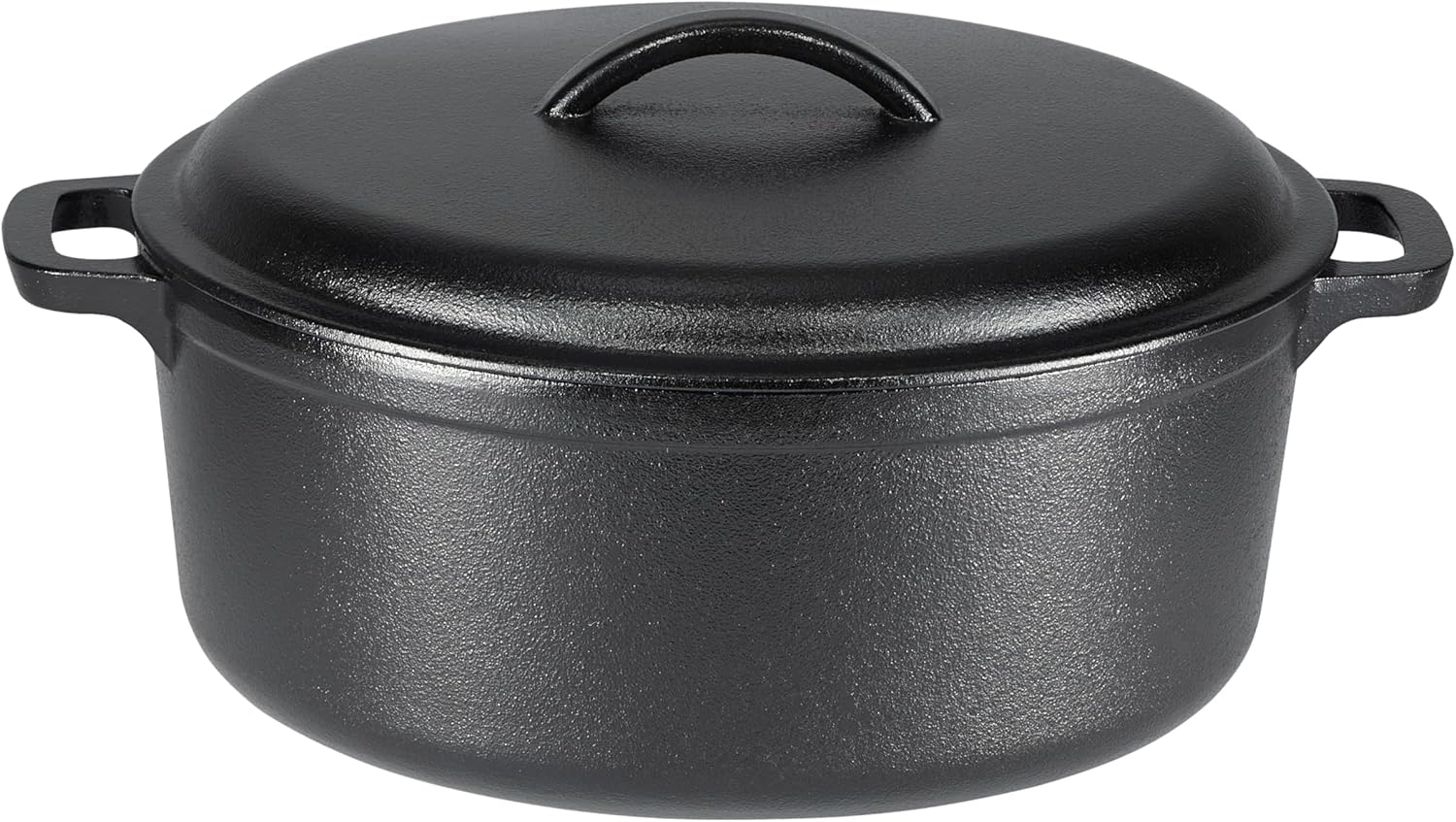
You can find a variety of different styles, types and price points to find the pieces that work best for your kitchen and your cooking. For instance, Amazon has its own brand of pre-seasoned cookware, including this set.

If you’ve bought some vintage pieces from an estate sale or thrift store, they’re easily cleaned and restored to a great usable condition. We’ve got quite a few pieces that are in need of attention, but just haven’t done them yet.
Coming Soon—Your Pantry Spring Cleaning
Another “spring cleaning/New Year’s” thing to do is tackle your pantry and overall food supply. Sure, there’s some canned soup in the pantry, but how old is it? Do you know where it is? Can you put your hands on something you need now, or will it take 45 minutes of unpacking to eventually find that item? Been there, done that, way too many times.
We faced this issue recently and pulled everything out of the small pantry.

The top half of the pantry after cleaning. Notice the foot of space at the top. Hoping that one day we can refurbish to use more of the space and keep it better organized and current.
We couldn’t close the door anymore because we’d put plastic milk crates in there to try and keep order. When we finished, we dragged two large black contractor bags outside to the garbage can for pickup. The door now closes.
Thank heavens the local parish (county) pickup has been outsourced to a company that uses garbage trucks with robotic pickup arms on the side of the vehicle. The human driver pulls up to the big green trash container that’s parked by the road. Then the robotic arm grabs it like an arcade claw machine, lifts it up over the top of the truck and dumps it into the back. Once emptied, the robotic arm sets down the can and they drive off. The driver goes up to the next container on the road and repeats the process. This machine can lift nearly any weight we put out there, so far. Otherwise, a person tasked with physically picking up that trash container that day would have been really struggling to lift everything.
That was some serious coin that went into the trash that day, folks. Not doing that again.
Long Term Food Storage For Emergencies
We bought those packaged foodstuffs with the best of intentions, especially after the big freeze in 2021 and Hurricane Ida. But many things were never used. They were “saved” for an emergency that never happened, and then way out of date for safe consumption. Donating to a food bank would have simply passed on the risk of food-borne illness and wasted their time.
If you’ve heard the term “emergency food” or “survival food,” well, that’s a related topic that I’m way overdue to talk about. BUT—we’ve sampled some new things recently. I’ll tell you all about it, soon as we finish the remainder that we have.
Meantime, give some thought to cleaning out your pantry while it’s still “winter,” even one shelf or a few old expired bags at a time. It’s one less thing you’ll need to do later, and you won’t be wondering where you put that soup you just bought.
Enjoy!