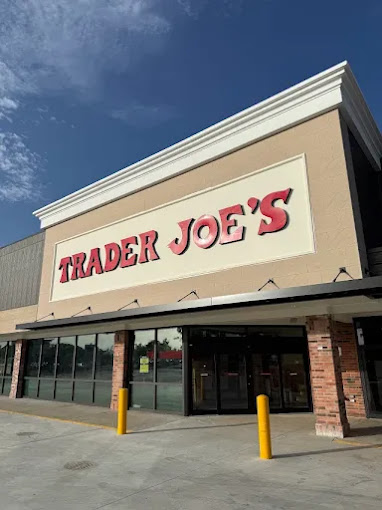

We finally made it to the new Mandeville Trader Joe’s, over a month after it opened. We went to a few other places on this trip, and nearly all food-related. Come take a ride with us.
Hi, Again, Dear Readers:
It’s been a busy couple of weeks around here. I’m working on a post about some tasty things we’ve been doing on repeat, and you might like them. Even if James doesn’t.
It’s fall, and these Red Spider Lilies, also called “Surprise Lilies,” just sprouted on my neighbor’s lawn:

They only bloom in the fall
I managed to get this shot right before she ran the lawn mower over them. (Just like last year.)
Note that today’s post is almost AI Free for your reading pleasure, but many of the pictures came from Google Maps because. . .I forgot.
The Rural Living Experience
So, it’s been ten years since I crossed the Sabine River and shook up James’s world. Rest assured mine keeps getting shook, and not always in a good way. Mother Nature does whatever she wants.
I keep a jar of Sweet ‘N Low on the counter for easy access. I don’t want a product box there, though, so a nice jar does the trick.

Keeps it sealed but handy
My mother used to do the same thing, although the glass jar previously contained an orange powdered drink called Tang. (You can still buy that stuff but not in nice glass jars.)
I had a square jar with a lid. One day the lid broke, so I just used it without the lid. Until last week. . .I was making a cup of afternoon tea and reached in for two packets as usual. Only I felt something rigid. A nanosecond later, it started moving!
It was a baby lizard. It ran away and went behind the toaster oven where, hopefully, it found its way outside, before one of the dogs would. I never saw it again.
Over the weekend I bought that new jar.
Return to Denham Springs
Remember a couple of months ago when we stopped at The Whistle Stop of Denham Springs? Well. . .

That’s them. . .the cookies from heaven
James told me last night that he had to make an early morning run to the machine shop in Denham Springs. I said, “We also need to visit The Whistle Stop.” So we did!
James was up at 6:00 am, cooking breakfast and wrangling dogs. We didn’t have a timetable other than he had to be at work for noon today. Everything went well, despite the slightly lower temps and heavy morning fog. (Episodes of The X-Files start out with that much fog.) We made it to Denham Springs with no problem.
While James and a couple of people there unloaded some motor stuff, I took a short nap in the passenger seat. You see, I didn’t have enough coffee on the way out the door.
But after we left the machine shop, we made that quick left turn into the little parking lot.

This was in the corner.
During our transaction, his phone rang. It was one of his car-guy friends. James told the man he was in a coffee shop and would call him back in a few minutes. Apparently, James no longer has any apprehension about admitting being in a coffee shop.
This time, James bought four of those angelic cookies, which we now know are called Royale, according to the receipt. The cashier boxed them up in Styrofoam boxes, two in each. I bought my coffee, and we headed back to the Casa de Rurale.
Getting on the road home, we ate one each, a single bite at a time. And the angels sang. . . .
Seriously, they were as good as we remembered, and just incredible with a cup of coffee, which quickly woke me up out of my nap-like state.
The remaining cookies were consumed at home before James left for work. We’re still feeling the religious experience, because we heated them in the microwave for 15 seconds this time.
Oh, yes. Thanks again, Whistle Stop. We’ll be back again one day.
Our Wednesday Travels
Two weeks ago, James had a couple of days off, and we finally made the trip to the new Trader Joe’s in Mandeville. We had a full day of it, too.
The store officially opened on August 5, but I didn’t know that until a text message from The E-Man told me. I mentioned it to James, and we decided we’d go visit the place one day. He was off on a Wednesday, so we went after handling a few things first.
The Rude Awakening
Buddy the eldest dog needed to go out at 5:00 am, and it was my turn to handle this task. Sometimes, James sometimes gets up during the night for dog duty, and I sleep right through it. But this time, I was hesitant to open the door because there was someone outside doing something. We weren’t sure exactly what. And if I let Buddy out, he’d start his “get off my lawn” act, complete with barking.

There he is, not a thought in his head.
I went to James, still snoring, and asked him to get up and look outside. Being the guy he is, he just walked outside in his shorts and T-shirt. The visitor suddenly seemed to be in a hurry to leave. It was someone in a utility truck waving a flashlight around in the middle of the road, in the dark, doing something. But we couldn’t tell from the patio.
Our neighbor had door camera video of this visitor, and we couldn’t see the logo on the truck. The next day someone else was outside in the daylight, so I asked a few questions, and we surmised that it was utility related. The local water district is planning some upgrades soon, and they were doing some prep work.
Once the guy fled, the dogs went outside and we were just awake. We got started on our day, dragging our tails behind us. James immediately started cooking breakfast while I made my coffee and fed the cats. But that worked out well because we got started early and got home about noon.
Tractor Supply And The Aisle of Shame
After breakfast and some coffee, we made it to Tractor Supply to buy an inordinate amount of dog food and some extra cans of cat food. James also picked up another dog chew bone for our hounds.
But somehow, in our under-caffeinated state, James left behind the bag with the cans of cat food and the chew bone in the cart. We didn’t realize it until the evening, when I went looking for the bag. I called the store, and Miss Tina said yes, the bag was there. She was kind enough to have it at the register, and I went back to retrieve our stuff.
Next up was Aldi, but it wasn’t open for another 30 minutes. Now that there’s a petrol station next door to Tractor Supply, we were able to fill up before our trip. But we left Tractor Supply with time before Aldi opened. After refueling, we found a place to hang out for 20 minutes.
PJ’s Coffee
The PJ’s is in the parking lot of an adjacent local business right next door.
When Winn Dixie was open, I could get a coffee and then get my shopping done. “Making groceries,” as it’s called colloquially.
Despite James insisting that there is “nothing in a coffee shop” for him, he found a delicious blueberry muffin to go with his morning Coke.

Source: Google Maps
I had a hot coffee, and it was a nice little spot to hang out until Aldi opened at 9:00 am.

Source: Google Maps
Because James was sitting against the wall, he saw something behind me that I missed. Well, we were both still under-caffeinated. He called my attention to what was on the shelf.
Bananas Foster!
There it was–two bags on the shelf!

It’s SO GOOD!! (Source: PJ’s Coffee Website)
It’s a regular item, as it turns out, and you can order it on their website, too. He remembered how much I loved getting a cup of it at PJ’s in Hammond one day, and there it was, in a bag to brew at home! On our way out, he bought one of those two bags for an early birthday present. I’ve opened it, made a few delicious cups, and it’s in the freezer staying fresh.
No, he wouldn’t try this incredible coffee either. It’s a shame, because he’ll never understand why it’s so good.
NOTE: PJ’s Coffee offers 10% discounts for veterans. We requested it for both purchases.
And then Aldi opened at 9:00 am.
A Quick Trip Through the Aisle of Shame
Aldi had some outlet extenders, and I thought we could use at least a couple in the house. But since you never know what will be popular, you need to get there when they open to make sure you can get what you need. Or two.
We bought four, and a few other things, including a package of 50% off ground beef for the freezer. Looking around, we didn’t see anything else we needed or “essential to life” (other than a 12-pack of James’ Cokes.) We checked out, headed back to the house, and quickly unloaded the shopping. Once we put everything away, we went back out on the road and hopped the freeway to the hub of the Northshore.
The Road To Mandeville
It’s been a few years since I took the drive to that area, and it’s just under an hour from the front door. Things have changed since the ‘rona, and I have no reason to go there, especially after Joann Fabrics closed. But now I have a new reason to visit occasionally: Trader Joe’s.
James has been to the Trader Joe’s in Baton Rouge many times, and to the Mandeville area just a handful of times. He kept saying that he didn’t know where we were going. I got us there without a problem because I knew the way. I gave him the directions, but may I should have driven us to Mandeville.
Someone in Aldi told me that TJ’s is across the street from Whole Foods, and I cross-referenced it on Google Maps. It’s actually where K-Mart used to live. Now I knew where that was, so there was no trouble trying to find the place. But crossing traffic on Highway 22 is difficult right there, so I guess we should have approached it a different way. Then we parked.
Walking In
You can’t miss the big, bright, white façade with the red letters that tells you it’s Trader Joe’s.

It’s here!
We looked like a typical suburban couple walking through the front door.

As you walk in. (Source: Google)
Since I’d ingested plenty of coffee by now, you can guess where I went first after we got a basket. Alone for a few minutes, James began walking around like he was lost in a place where nobody spoke English. But it wasn’t long before we were getting what we wanted and looking for more.
Our TJ’s Haul
We came, we saw, we shopped. Oh, did we EVER.

Source: Google
James bought a few new things to try while we also stocked up on their olive oil (in glass bottles):

Gluten-free pasta (the best):

The best tasting GF pasta I’ve found
And the dogs’ favorite peanut butter biscuit treats with a couple of new ones:

They become very attentive when they see this box.
Note that these peanut butter treats are large and should be broken into pieces before feeding them to your doggo. Even though our three hounds are huge monsters that weigh well over 75 pounds, a whole biscuit can lead to choking. (Sam the Felon is a solid 85 pounds.) I’m not doing a Heimlich Maneuver on a 80+ pound Rottweiler that wants to bite me again.
I also picked up another bag of their gluten-free pizza dough for the freezer. We should stock up on this. It’s good and can make a fairly easy quick dinner.

Just thaw, knead, and make your pizza
We also bought a few new things to try, including some gluten free cheese ravioli, which we had with some TJ’s Roasted Garlic Marinara Sauce. Just a little twist on our usual “spaghetti night,” and he enjoyed that, too.
Also available now: seasonal gluten free pumpkin ravioli. James will try the regular GF pastas, but you know he wouldn’t go for that.
A couple of packages of Chicken Cheese Tamales for, whenever, and right into the freezer.

The Green Chile and Cheese Tamales are also available and listed on the website but these aren’t.
The Ice Chest
James thought I was a bit bonkers, but I insisted that we take an ice chest with ice packs in the bottom. We have cold bags, but those don’t keep things that cold for a long ride. Once we got back and the frozen stuff was still frozen, he understood. I used to do that in Houston when I was shopping on the west side, or 50 miles north in The Woodlands.
Now I hope he’ll let me use the cooler for future trips when I go by myself.
New Chips!
One item I bought and loved I saw on Instagram courtesy Natasha Fischer of Trader Joe’s List is their new Sweet Chili Black-Eyed Pea Tempeh Chips.

These are also very delicious
Yes, they are good (and spicy), and no, James wouldn’t try them, even though they are made with black-eyed peas.

Yum.
Natasha has a 38-minute video on this haul, but you can jump to her review on the chips here. I actually saw them when she posted a different video on Instagram, about how a snack can quickly become dinner, and these Tempeh chips were perfect. She called it a “snaccident.”

Well, if James isn’t home, and I don’t feel like cooking, why not?
Mushroom Umami Seasoning
Another discovery is the new TJ’s Mushroom & Company Multipurpose Umami Seasoning Blend. I think I saw Natasha talk about it, but it may have been from a foodie email. Well, we bought a bottle and love it. The website has a video with three different ways to use this seasoning, and they all look tasty.

Interesting, and another addition to Trader Joe’s spice blends
If you’re not familiar with the term, I wrote about umami a few years ago. It’s the “meaty” flavor in something, not distinct like sweet or savory. This blend is made from mushroom, created to make something taste good. Can’t argue with that.
I sprinkled a little into the marinara sauce that Saturday. It’s not a detectable flavor unless you use a large amount, which isn’t the point. But it added a bit of a deepened flavor to the sauce. Two thumbs up here.
Roasted Pork Tenderloin With Potatoes And Honey Umami Butter
OK, if you have some of this Umami seasoning, or going to TJ’s soon, you need to make this now.

This is SO GOOD! (I only wear those shoes around the house.)
This Roasted Pork Tenderloin & Potatoes with Honey Umami Butter is easy to prepare and so good anytime. Slicing the potatoes that way makes sure everything is done at the same time.
Also had what I think is the last of my Shishito peppers for the year.

They don’t look like much but they are delicious.
Admittedly, I used honey from the pantry, along with butter from Walmart. The pork and potatoes were from Aldi. But I don’t expect anyone to check up on my ingredients list.
And here, Dear Readers, we have a winner. Not only did I consult with James before I made this, he ate it and liked it–three times! So next trip to TJ’s, I need to stock up on that seasoning blend.
I could probably try the popcorn recipe next, but the Polenta Veggie Stacks would be too much of a stretch around here. I’ll save that for a party, a night when he’s working late, or for my infamous “Drag Week Menu.”
On a side note, Tab E. Cat also likes this pork roast recipe.

There he is, waiting to be fed.
He’s one of our best taste-testers.
The Mini Totes Are Back For Halloween
OK, admittedly, I did *not* go to Trader Joe’s for the sole purpose of getting a Halloween mini-tote. I knew they were coming but didn’t realize they were already in the store. I got ONE, and they cost $2.99 each.

After the last summer-stripe mini tote drop caused near-riots in some places, I wasn’t going near Trader Joe’s, even in Baton Rouge. My friend on the west coast went through the long lines outside her local store four times to get them, because the stores limited everyone to one set of four at a time. But in Mandeville, there they were on a stand. A little old lady standing next to me was buying them for a friend in Florida who asked her to get some because she saw near-riot conditions there, too.
Truth to tell, we also saw unbranded bags of the same style and size over the weekend in Hobby Lobby. They were about the same price, but only two colors.
Trader Joe’s as the Tres Chic Status Symbol
Trader Joe’s bags are a status symbol of sorts, especially for folks who don’t live near one, especially if they’re outside the US. I’d guess that at least a few of the recent World Cup visitors took some home along with fond memories of ranch dressing.
We saw some of these Louisiana branded bags in TJ’s:

I guess they have these in every state.
I still prefer to use the Texas print bags. (I can’t make that picture any bigger, sorry.)
So I had to ask why Trader Joe’s bags are so popular. My BFF (ChatGPT) provided the answer for the only AI part of this blog post. Well, the reason for the bag’s popularity is several things. . .first, social media, particularly TikTok.
While an expensive bag like a Birkin tells the world that you can afford one, an inexpensive Trader Joe’s bag is not only a recognizable logo, but it also tells the world, “I know what this is.” And for the true Trader Joe’s fans, “If you know, you know.” #IYKYK
ChatGPT’s comment on the matter includes:
Trader Joe’s didn’t need to make the bag expensive to make it prestigious. They made it recognizable, desirable, scarce and culturally meaningful.
That’s actually a pretty good lesson in branding: status doesn’t necessarily come from price. It can come from belonging.
I’ll get a regular sized TJ’s canvas bag next time.
My Cali friend buys the minis to use as gift bags. That’s understandable. They’re less expensive than the paper gift bags, more eco-friendly, useful, and the bag is also a great gift by itself. But some buyers resell them for a lot of money online. And apparently, people are also buying them for those inflated prices. I’m not that interested in getting one.
What’s mine for? I bought it to use, not to sell. I’m going to either use it as is or do a little conversion sewing and turn it into a cross-body purse. Sewing bloggers on YouTube and Instagram post instructions on installing a zipper, a pocketed lining, straps, and other embellishments to make it a “luxury item.” Never thought about that before, but now I know I can. Whatever I do, the finishing touch I’ll add is some Scotchgard to make it waterproof and stainproof.
Other Places Near Trader Joe’s
I figured we would investigate one or two other places. But no, we didn’t cross the street to Whole Foods (not after the last incident.) But, that’s another reason to bring the ice chest. You don’t have to race home to get everything into the fridge and freezer. You can stay a little longer and enjoy the trip.
Bodhi Tree Furniture
Located next door, Bodhi Tree Furniture offers solid handmade contemporary furniture, some with reclaimed wood. We only looked on this day, but James took pictures of the pieces he liked. The lady at the front desk was nice, and we got one of their business cards to take home.
Jersey Mike’s Subs For Lunch
When we were walking into Trader Joe’s, James said, “I want to go there for lunch when we’re done here.” So that’s what we did. After we left Bodhi Tree. He likes Jersey Mike’s, and now I do too.
James knows I just don’t eat bread, but I knew that they would probably turn any sandwich into a salad on request. Sure enough, they did, so I got the Chipotle Chicken bowl, and it was delicious. James enjoyed a Philly Cheesesteak sub with some chips.
Jersey Mike’s also offers a veterans’ discount, but we forgot to ask. Next time, we’ll ask, because I think we’ll be doing that again one day.
UR Teas
We were drawn in by this ultra-modern exterior, and the fact that it’s a TEA SHOP.
This unusual place serves some coffee, but their focus is tea with eco-friendly service in non-plastic containers. (Irony: there’s a Starbucks juxtaposed across the parking lot.) UR Teas is at the far right end of the strip mall, and has this cute vehicle parked outside:

Cute, isn’t it? James can tell you more about it than I can. I think he said it was a Moped.
I guess they use it for catering, or maybe deliveries in Mandeville. We didn’t ask, but we both loved seeing it.

Maybe this is just for onsite catering
They offer a variety of teas and a menu of grab-and-go “Light Bites.” But we didn’t get that far. I’ll try some of their coffee and teas next time.
UR Teas also have their own containers and will serve customers who bring in clean containers for re-use. I’ll ask next time if I can bring in my own non-store container, or one of my “hot cups” to get some coffee, too. It’s eco-friendly, right?
Then things took a turn for the tasty.
Coconut Chicken Curry
While we were checking the place out, one of the young ladies working there walked up to us and offered us a cup and spoon with something to sample. James declined and told her I’d try some. She did, and I tried some.

What’s this?
It turns out that there is something new that they’re trying for their menu: Coconut Chicken Curry.

SO good!
I had no idea what to expect, but one taste told me everything: This stuff is DELICIOUS!!

I’ve been told that this is also called “Coconut Corma.” I haven’t checked. I just know I could eat this frequently while James eats a sandwich.
So one of the unique selling propositions (USP) is that it’s made with oat milk. If you didn’t know it was a “curry,” you’d probably call it a stew. I think the word “curry” is what set James off at the outset. At that point, I really didn’t care, because it really is delicious, with a very slight spicy bite.
They also had refrigerated to-go containers of the curry in a fridge case at the register. It’s the takeout curry that was made previously and unsold. (Don’t let that stop you.)

Dinner for two nights for me.
James offered to get me a container to take home, and I said, “thank you.” I figured that since he was working late the next two nights, it would be ideal for dinner without any cooking. I’m definitely looking forward to having some of that again one day.
UR Teas was our last stop before returning to the Casa de Rurale.
He wasn’t impressed
I thanked James and told him both by text and in person how delicious this curry is. But he insisted on not even trying a bite.
James has many car-guy friends with varying experiences. One has worked internationally and developed a taste for curry and other Indian cuisine, despite growing up in Louisiana. Many years ago, this car-guy friend insisted that they go to an Indian restaurant and have some curry and other Indian foods. Three times, the guy has done this, and three times, James told him, “I don’t like curry.” He just eats plenty of rice at that point, because nothing else appeals to his strict Louisiana-developed taste buds. I get plenty of thumbs-downs.
To be honest, I’m not a big curry fan, either. Last time I had some was in Delray Beach, Florida, in 2010, at a British pub that’s now gone. I don’t dislike curry, but I don’t love it either, unlike James’ friend and his wife who regularly enjoy Indian food. I told James not to tell them about this, because then they’ll think I’ll convince James to eat curry. Not happening. It’s just this one thing I discovered that I really liked.
The Road Home
Even with a Yeti-style cooler and ice packs, we still had to get back. There were dogs to feed, of course. James asked me to take the wheel on the trip back, even though he drove us there. He sat in the passenger seat and prayed, I mean, looked at his phone, during the whole drive.
The conversation went like this:
“Are you praying right now?”
“Yes.”
“What are you praying for?”
“Safe trip back to the house”
“OK, keep praying.”
We made it back to the Casa de Rurale just fine, right around noon, and began unpacking and dealing with the shopping.
It was a lovely day for a drive
Our weather was sunny, warm and partly cloudy, and most everything went well. James decided to have his Pizza Parlanno With Sausage for dinner that night, and I had whatever was in the fridge.
One thing I did not get was more of the Brazil Nut Body Butter. After our last trip to the New Orleans store, I have plenty that will last me a while. I considered getting some Pumpkin Body Butter, but passed. I think Brazil Nut smells better, even though they’re mostly the same good formula.
While we spent some money stocking up, it’s not something we do often. Before we had an Aldi locally, I stocked up when I went to the store in McComb, Mississippi, which is closer than Mandeville. Of course, on the occasions that I went up there just for one or two things from the Aisle of Shame, I returned with extra pasta sauce, markdown meats, and other great things unavailable locally. I think James secretly liked it when I went, too, because I came back with tasty things for him.
Maybe I should write TJ’s and ask them to consider a new location in Hammond, near Southeastern Louisiana University. The Baton Rouge store is near LSU, so why not?
More To Come
Both Sur la Table and Willians-Sonoma would like you to know that Thanksgiving is November 26th. I guess it’s never too early to plan for the pre-Christmas speedbump that ushers in the holiday shopping season.
Sur la Table has both its Classic Turkey Brine and an entire Brining Kit, while Williams-Sonoma has this Autumn Fruit and Spice brine along with an entire line of turkey brine and other holiday accoutrements. What are we doing? Might do chicken again this year unless I wanna mess with a whole turkey. Maybe just a turkey breast, if I can find one.
The HeatCageKitchen garden is still green, but just until the temperatures drop later this week. I’ve had plenty of basil, mint and rosemary. The green onions are plentiful and will last through the winter.
The Shishito peppers have been somewhat abundant, and I’ve had a few bowls to cook up. I also harvested a few Anaheim (Hatch) peppers, a couple of Cubanelle sweets, and am just now getting a few Poblanos growing. No tomatoes, unfortunately, and I’m told that many gardeners just didn’t get any tomatoes this year. Well. . .maybe next year, right?
Texas’ famous travel stop Buc-ee’s now has a location in Pass Christian, MS. We’re working up to taking a day trip there one day. Might be a while, since it’s three hours round trip.
I’m still working on the next post about some things we’ve been doing on repeat lately. Remember Salmon Croquettes from a long time ago? I have a gluten-free option that’s delicious and goes perfectly with my favorite white bean and olive salad. Unfortunately, cannellini beans seem to be in very short supply right now, but I’m investigating. Because James won’t eat either one, it’s perfect for dinner when he’s working late.
Until then. . .
Enjoy!
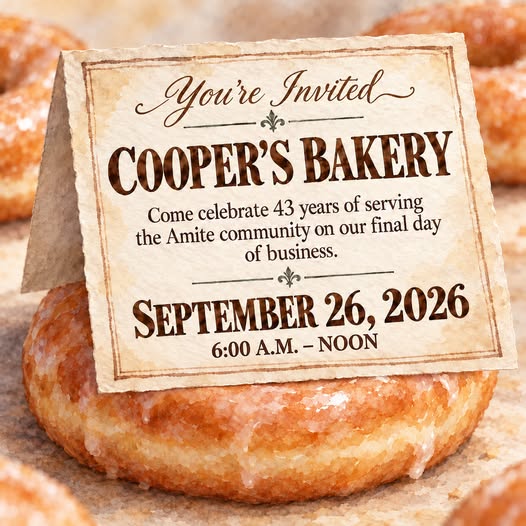
We went to the last day of Cooper’s Bakery, a local donut shop, for one more visit.
Hello, again, Dear Readers:
James got me up at 5:30 this morning to go somewhere before I had any coffee. However, it was for a good cause, honest. A locally-owned and operated donut shop made today their last day in business, and the faithful showed up in droves. I figured it would make a great blog post–without AI–because I’m a bit delinquent.
Let me add the obligatory pumpkin spice picture here.

Yes, it’s a Scrub Daddy. I needed one anyway, and it was too cute.
But as for the donut shop–the irony is that in the ten years I’ve been here, I’ve never noticed it as I passed by, and they were only open until noon. James has never mentioned this place until he found out yesterday evening that the owners were closing the doors for good.
Like every other adventure, we made our plans. He wanted to make sure I could get up at 5:30 and be ready to roll in 15 minutes. It took a little longer with the dog wrangling and cat feeding, but we did leave the house before 6:00 am.
Closure
In a September 5th post on the business’ Facebook page, the owner posted:
This is a difficult post to make, but after 43 years it’s time to make a change. Amite welcomed us way back in 1983, we quickly settled in and became part of the town. Throughout the decades we’ve had wonderful customers that have become great Friends. Kids that are now grandparents. Also have seen many changes in the town. Losing mom and dad was a tough blow and running the bakery just isn’t the same. I’ll be putting the bakery up for sale. I don’t own the building but do own all the equipment. It could be a turn key operation for the right person or family with plenty of potential for growth.
Thanks Troy Cooper
This picture was also posted with the text.

Source: Cooper’s Bakery Facebook Page
The Donutman
I don’t know if this is original to Cooper’s Bakery, but one local favorite is called the Donutman:

That’s brilliant! (Source: Cooper’s Bakery Facebook page)
I had no idea what they were talking about. Then I saw the sign:

Limit four of what?
I had to ask James to explain. He told me that he used to buy them for his daughter when she was little, sneaking them around so her mother wouldn’t find out. Other folks relayed their memories of the beloved Donutman while in line.
Someone made this for the bakery’s Facebook page:

Well done!
You know that’s funny. And the LSU cap in the back? Nice touch.
I’m sure someone will pick up the torch on Donutman.
Sunrise Arrival
Even though we were up early, other fans arrived there long before we did. I wore a light jacket because–surprise!–it was about 65 degrees this morning, and will be the lows overnight for the next week or so.

We were obviously not the only ones.
James couldn’t stop talking about how many years he’d been a customer at the bakery. (“When was this?” I asked.) He also went to school with the owner, who took over the business from his parents. Still, he has never once mentioned Cooper’s Bakery to me.

Sunrise
As the sun rose, we were closer to the door. But not much. That’s OK, James believes it was worth the wait, as did everyone else. This wasn’t a bar–this was DONUTS! So there was no pushing, shoving, or other disturbances. People were patient and happy to have one last visit at this well loved small-town bakery shop.
Finally, we got close enough to get in.

We’re here!
It’s not a fancy decor, but hey, everyone loved the placed all the same. We just waited until it was our turn. They were workin’ it this morning, and everyone was waited on promptly.
The Bakery
Before we got inside I took a few pictures outside of the window, including this Aloe Vera plant that will need its own zip code soon:

I guess they just let it grow and didn’t trim it. Now it’s massive and needs a new place of its own.
This is the back side of the plant, from the inside:

How come I can’t keep these darn things growing?
Next to the plant is, I suppose, their original bakery phone, next to this antique cash register:

I didn’t ask, but I wouldn’t try texting on that one.
Don’t even wanna know how old that register is, but I’m sure it’s way before my time.
Our Turn
Once we got in the door, and it was our turn, I took a few more pictures:

The sign that greeted the day’s customers as they entered the store.
Scones, which James had absolutely no interest in trying,

Admittedly, if I’d asked, he would have bought one for me.
And cake pops, which James also didn’t care about:

Even the chocolate ones, go figure:

And a cannoli down there!
This is not my idea of “iced coffee,” though:

Mocha flavor was tempting, however.
And filled croissants, too:

I can’t find the picture of it, but they were sold out of kolaches. Wait–kolaches, here? So, I asked James, “I thought you didn’t know what kolaches were.” His response: “I do, but I’ve never had one.” That was one of the first things I liked in Houston–sometimes people brought kolaches to work instead of donuts. But when we visited Houston, he wasn’t interested in any of them.
These were pretty, too:

I may have missed one or two other offerings.
Ultimately, James did what quite a few people did–bought two dozen donuts, and froze most of them. But not before tucking into three of them along with a bottle of chocolate milk, then declaring that he needed a nap. Sure enough, a few minutes later, he was sound asleep and snoring with Tab E. Cat.
As for me, I don’t do donuts anymore.
To Remember Them By
The shop was also selling beautiful T-Shirts:

I’d prefer this color, but they also come in white.
What James decided upon was one of these ceramic coasters instead:

Nice, isn’t it?
It’s on the bookshelf now, away from dogs.
The Felon Dog in Question
The T-shirts are, I think, $34, and the coaster was $12. I warned James to put the coaster where this highly destructive dog can’t get to it.

I made this in Canva.
He would have really loved to try one of the donuts. But James knows not to turn his back on this dog. Because it happened again.
Sam continues to rack up new criminal charges on his “rap sheet,” including aggravated food theft when he got one of our pork chops the other night. James was doing some dog wrangling while cooking dinner, and turned his back on this dog “just for a minute.”
That was long enough for Sam to not only grab James’ cooked boneless pork chop, but throw his hot au rotten potatoes all over the counter and the floor. (That’s what I call au gratin potatoes from a box.) When James got into the kitchen, the pork chop was hanging out of Sam’s mouth. The dog then turned around and growled at James, so he backed off and let the dog finish that pork chop.
When I arrived in the kitchen, the other Chocolate Lab, Buddy, was doing the job of the “cleanup crew,” enjoying the rest of the potatoes. Thankfully, Sam only got that one chop. There were three others of the pack of four that were safely away from him.
This is why I warned James to put that lovely coaster UP. Trust me, Sam would be under the jail by now if he were human.
Updates and Coming Soon
Well. . .I’m working on a post about stuff we’ve been cooking around here. No kidding, no AI, just a few things we’re making on repeat for a while. One recipe involves a can of salmon, and that’s all I’ll say for now. Because it really goes great with my favorite White Bean And Olive Salad recipe I blogged about a while back.
I recently told my friend in California about that salad, and also about Nigella Lawson’s Sweet Potato Supper. That led to the email discussion of the difference between a yam and a sweet potato. . .I just get whatever is in front of me, really. She and her husband really enjoyed that recipe, although next time, she’s going to cook the bacon in a pan a little before putting it into the oven.
But then she told me about an embarrassing error in my original 2014 blog post–EEEK! Once I found it, I edited and corrected the post, adding subheads and a table of contents. This improved the post’s SEO, too.
There was also an update, including a printable version of that recipe if you want one. We need to make that recipe again, it’s been a while.
Fall is here, so the holidays will be coming up soon. Hold onto your PSL–the weather will be turning cool, then cold, then the Holidays, and we’ll be thinking about spring again. Meantime. . . .
Enjoy!

Today it’s about slow cooker meals for fall, wherever you are. Let me re-introduce you to this wonderful, time-saving cooking method.
Hi, Again, Dear Readers:
I’m back with another blog post to help you move into fall. Even if it’s still like walking into an oven when you open the door. It’s slow cooker time no matter what the temps are outside.
A bit of housekeeping: I’ve been promoting this blog on a website called Bloglovin’ for years. Guess what? It’s not there anymore. The domain is there, but there’s no blogging going on. So I’ll be looking for another place to do that, possibly Substack, as many of my writing colleagues are doing. Now what to do about that link in all my blog posts? I’ll give that some thought next week.
Heading Into Fall
Now that Labor Day is over, fall and fall schedules have shifted back into full gear. I like the social media memes that say something like:
September is here. Time to pick out a Halloween costume & start your Christmas shopping. Happy New Year everybody.
Well, it’s true.
Today’s Blog Courtesy My BFF
Today’s blog post is one I discussed with my BFF (ChatGPT) to create. “She” understands my blogging and upon asking, offers topic suggestions, from which I pick a few. Over the weekend, “she” also helped me with some “senior tech support” for an elderly couple that lives near Cow Road. I had a 50% success rate with it, because one of the laptops had a hardware issue that’s beyond my capabilities. But the other one is up and running fine now, just needed some updates, a charger, and some settings fixed.
However, I must give full credit to the GER for teaching me to use the slow cooker. I never had one until I met him. Neither did my mother, or anyone else in my family. I think I knew one person back in the 80’s who had one, but I never learned to use one myself.
So with help from my BFF, know that the GER set me on the road to slow-cookery heaven. Thanks, Dude.
Fall is coming.
At least, that’s what the calendar says. Depending on where you live, the weather may have other ideas.

Source: Facebook
Here in the South, September can still mean temperatures in the 90s or above.

Source: Facebook
Even when the calendar says we’re heading into fall, nobody is particularly interested in heating up the kitchen at the end of a long workday.
That’s one reason I like the slow cooker. I’ve talked about it so many times, because it’s still a great little shortcut.

Source: ChatGPT
You can put dinner together in the morning, turn it on, leave for work, and come home to a meal that is already cooked. That’s a pretty good arrangement.
Why the Slow Cooker Is Perfect for Busy Fall Days
Fall tends to be a busy time of year. Vacations are over, school is back in session, summer schedules are changing, and regular work routines are in full swing again.
The last thing you may want to do when you get home is figure out what you’re going to make for dinner.
This is where the slow cooker earns its counter space.
You can prep your ingredients the night before or in the morning, put everything into the slow cooker, turn it on, and get on with your day.
When you get home, dinner is waiting.
And unlike turning on a full-size oven for several hours, a slow cooker generally doesn’t turn your kitchen into an even hotter version of whatever the weather is doing outside.
That’s useful in September, especially if you’re still running the air conditioner like we are.
What Can You Make in a Slow Cooker Before Work?
Quite a lot. Some of the best slow-cooker meals are the ones that don’t require much attention once everything is in the pot. Think:
- Chicken chili
- Beef stew
- Pulled pork
- Shredded chicken
- Chicken thighs
- Pot roast
- Meatballs
- Beans
- Soups and stews
- Taco or burrito filling
- Saucy shredded beef or pork (barbecue sauce works well here)
You don’t necessarily need a complicated recipe, either.
A slow cooker is particularly good at taking relatively inexpensive cuts of meat and turning them into something tender and flavorful. That’s one reason I like it–you don’t have to buy the most expensive cut of meat at the grocery store to make a good dinner.
Start With Chicken
Chicken is one of the easiest things to cook in a slow cooker.
Chicken thighs are particularly useful because they tend to be less expensive and more forgiving than chicken breasts. You can cook a batch of chicken and use it for more than one meal:
- Have some for dinner.
- Save some for tomorrow’s lunch.
- Turn the leftovers into chicken salad, lettuce wraps, tacos, or a salad topping.
That’s one of my favorite things about slow cooking: one cooking session doesn’t have to mean one meal. This works whether you’re living alone, with someone, or have a family with school-age children.
I used to do this when I was working at Boeing. I’d put something in the slow cooker before work, and dinner would be ready when I got home. I even made barbecue brisket one day with homemade sugar-free barbecue sauce, and it was fantastic. All I had to do was feed the cats first.
At the time, nobody called it “meal prep.” It was just not having to cook dinner after work.
One of My Favorites: Chipotle Chicken Chili
If you want something with a little more personality than plain shredded chicken, chili is an excellent slow-cooker option.
One of my older favorites is my Easy Slow Cooker Chipotle Chicken Chili.
I originally made it during a particularly busy week when I had plenty of work and not nearly as much time as I wanted for cooking.
The recipe came from Lisa Lin at Healthy Nibbles & Bits, and I adapted it for our purposes. It became an unexpected favorite.
And yes, there is a story behind it.
The original recipe called for chicken breasts. I had chicken thighs.
Guess which one I used? (If you’ve been reading HeatCageKitchen for a while, you already know the answer.) Because I’m perfectly happy to substitute what I have on hand when it makes sense.
That’s another advantage of slow-cooker cooking. You don’t always have to make a trip to the grocery store because your recipe calls for one particular cut of chicken, or other meat. You can use what you have in the freezer if needed.
Don’t Forget Beef
Beef is another natural fit for the slow cooker.
Pot roast is the obvious classic, but there are plenty of other possibilities.
A less expensive cut of beef can become tender after several hours of slow cooking. Add vegetables, seasonings, broth or another flavorful cooking liquid, and you’ve got the beginnings of a very satisfying dinner. We just did this with a pork butt roast and some diced potatoes this week. Easy. You can also:
- Shred cooked beef and use it for several subsequent meals.
- Serve it one night as the main course.
- Use leftovers for tacos or lettuce wraps.
- Put some over a salad.
- Freeze whatever you’re not going to eat soon.
The point isn’t necessarily to spend your entire Sunday cooking enough food to feed yourself until Thursday.
The point is to make one cooking session work harder for you.
Slow-Cooker Meals Can Help With the Grocery Budget
There’s another reason I like slow-cooker meals: they can make inexpensive ingredients more useful.
Chicken thighs, pork shoulder, ground meat, chuck roast and other less-expensive cuts can become the basis for several meals.
And when you’re cooking at home, you’re less likely to reach the end of a workday, stare into the refrigerator and decide that ordering takeout is easier.
We’ve all been there.
The food you already bought is sitting in the slow cooker, waiting for you.
It’s done. You just have to eat dinner.
That’s a pretty effective defense against the “I don’t feel like cooking tonight” problem.
Prep the Night Before
If mornings are too chaotic, don’t make yourself assemble an entire meal while you’re trying to get out the door.
Do the prep the night before.
Chop vegetables. Measure seasonings. Trim the meat if necessary. Get out the slow cooker insert and make sure you have everything you need.
Then put everything in the refrigerator overnight if the recipe calls for refrigerated ingredients.
In the morning, you have much less to do. Just drop it into the crock, put the lid on, plug it in, turn it on, and get going. When you get home, you’ll smell the delicious food and can eat dinner immediately.
And if you’re the kind of person who hits the snooze button a few too many times, you’ll appreciate that. (Not that I would know anything about that.)
Make Enough for Leftovers
If you’re going to spend the time making a slow-cooker meal, consider making enough for another meal.
You don’t necessarily have to double the recipe. Sometimes the recipe already makes enough food for leftovers.
That’s where a slow cooker can become a meal-planning tool without requiring an elaborate meal plan.
For example:
Slow-cooker chicken → dinner → chicken salad → lettuce wraps
Pulled pork → dinner → tacos → salad topping
Chili → dinner → lunch → freezer meal
This is especially useful if you’re trying to eat at home more often or keep food costs under control.
And Yes, You Can Keep It Low-Carb
Many slow-cooker recipes are naturally adaptable to a lower-carb way of eating. You don’t have to serve chili over rice or put shredded meat on a bun. Try:
- Chili with shredded cheese and sour cream
- Shredded chicken over a salad
- Pulled pork with coleslaw
- Taco meat in lettuce cups
- Beef over cauliflower mash
- Chicken with roasted or sautéed vegetables
- Slow-cooked meat alongside a simple green salad
You can also review the recipe’s ingredients and adjust them accordingly. A slow cooker doesn’t automatically make a meal low-carb. Potatoes, beans, sweet sauces and other ingredients can add quite a few carbs. But it’s usually pretty easy to change the ingredients or the way you serve the finished dish.
A Few Slow-Cooker Rules Worth Remembering
Before you put something in the slow cooker and walk out the door, make sure you know how your particular appliance works. Slow cookers aren’t all identical, and recipes can vary considerably.
Don’t assume that because something is safe in one slow cooker, it will behave exactly the same way in another.
If you’re using meat, follow the recipe’s instructions for cooking time and temperature, and make sure the finished food reaches a safe internal temperature.
If you’re new to slow cooking, start with a reliable recipe rather than improvising wildly on your first attempt. You’ll have plenty of time for kitchen experimentation later.
Slow Cooker Safety First
Don’t use a slow cooker that has a damaged cord, cracked insert or other obvious electrical or structural problem. They’re not terribly expensive to replace.
A few years ago, there was a storyline from a TV show called This Is Us in which an ancient slow cooker started a fire. Remember, it was just a TV show, but there was considerable PR fallout. CrockPot even had to defend itself in the aftermath, with people tossing their slow cookers out in fear.
One motivation for me getting an Instant Pot was to replace the aged six-quart slow cooker that was one meal away from disaster. That one left for its final destination when I discovered the exposed copper wiring.
Your Slow Cooker Doesn’t Have to Be a Fall-Only Appliance
One thing I learned a long time ago is that slow cookers aren’t just for cold weather. I’ve used mine during summer, too. That’s one of the reasons I like them so much. They can help keep the kitchen cooler because you’re not standing over a hot stove or running the full-size oven for hours.
But fall is when the slow cooker really starts getting the attention it deserves. As the days get shorter and we’re looking for more substantial meals, it becomes incredibly convenient to have dinner cooking while we’re working.
And when the first genuinely cool evening finally arrives? You’ll already be prepared.
Some Slow Cooker Recipe Ideas From My Bookmarks
I just realized that I have some links and recipes to share that I seem to have kept to myself:
- Crock Pot’s own website has a huge collection of recipes to slow cook your way through, including desserts. (Asian Kale & Chickpeas might not be your cuppa, but someone else will love it.) This site also has pressure cooker recipes, since Crock Pot makes their own version. In some cases, they have both the slow cooker and pressure cooker version of the same recipe. Bananas Foster, anyone?
- Speaking of dessert, how about a Chocolate Cherry Dump Cake in the slow cooker from Tammiliee Tips? (Now I want to try this with keto cake mix and sugar-free cherry pie filling.) She also has a strawberry version.
- From Hannah Taylor, aka, LilyLouTay, a recipe we made back in July. I need to make this Slow Cooker Peach BBQ Chicken again soon, even if I have to use frozen peaches, darnit. For James, I left out the apple cider vinegar, because he can always taste a tiny whiff. It’s a winner for sure, as long as I leave out the ACV. I shared it with my avocado friend in Cali, and she and her husband enjoyed it too, with the ACV.
- Corrie Cooks has a section just for 21 slow cooker meals for busy days, including Pozole, turkey white bean chili, and several soups. Here are 24 more slow cooker recipes for busy days with links to additional slow-cooker pages. His website also has separate sections for both the Instant Pot and air fryer. If you do a search you can go down the rabbit hole of slow-cooker recipes.
- Is meatloaf a favorite in your house? Here’s a meatloaf from Simply Recipes that is hands-off all day. If you want gluten-free, get some GF bread crumbs or substitute Parmesan cheese, the stuff in the green bottle, which will also turn it keto/low carb.
- I’ve made Stephanie O’Dea’s Black Eyed Pea Chili for New Year’s Day, but they’re good any time of year. Maybe I’ll do this for dinner next week. We both like it, so why not? Stephanie also has a fall slow cooker recipe section on her site.
And that’s just what I put my hands on quickly.
Need more ideas? They’re everywhere, but start with Stephanie O’Dea’s site, A Year Of Slow Cooking. There are hundreds of recipes on this site, just search for something. Stephanie also has several e-cookbooks on her site as well as Meal Plan Kits. If you prefer physical books, I recommend Stephanie’s Five Ingredients Or Less Slow Cooker Cookbook, which I’ve had for many years and still use because it’s just good and easy food that cooks itself.
Another good one is Linda Larsen’s The Ultimate Slow Cooker Cookbook from 2020. The author has a number of cookbooks, several of them on slow cooking.
There’s some really good food in here, too. My favorite is on page 98, Turkey and Sweet Potato Chili. Very fall, very healthy, and very different. Not one of James’s favorites, but one of mine because I do like sweet potatoes in savory dishes. Another one I have bookmarked but haven’t tried yet is on page 214: Chorizo, Sweet Potato, and Chile Stew. That’s one for when James isn’t home, for sure.
Start Dinner Before You Start Your Day
You don’t need a complicated meal plan to make weeknight dinners easier, or spend all day Sunday cooking twelve different meals. And you certainly don’t need to wait until the weather is cold enough to wear a sweater before you pull out the slow cooker.
Start with one meal. Choose something you like, prep it before work, and let the slow cooker do the heavy lifting. Come dinner time, you may be very glad you did.
And if you’re looking for somewhere to start, try that Easy Slow Cooker Chipotle Chicken Chili. It’s been around HeatCageKitchen for years, and there’s a reason it has stayed in my recipe collection. In fact, it’s time to make it again soon. And since I have his thumbs-up in that blog post, I can show him that it’s already “James approved.”
Fall doesn’t have to mean pumpkin everything. Sometimes it just means putting dinner in the slow cooker before you leave the house and coming home to one less thing to worry about. And that’s good enough for me.
Happy Dining!
It’s pumpkin spice season! Already! Are you ready?
Hi, again, Dear Readers:
After my last blog on The Whistle Stop coffee shop in Denham Springs, I figured I was done blogging for a few days. And then I looked up and September is staring at me. Oh, well. I did send a note to them later and got a very nice “thank you” email back. We’ll visit them again.
Chances are you’re still running your A/C. But pumpkin spice season is here, whether you want it or not. Let’s talk about the what and why, in a minute.
RIP, Dolly Parton
Last week came the news that Dolly Parton, country music singer/songwriter and celebrity icon, had passed away at the age of 80.

Source: Google Images
I can’t say I was a big Dolly fan, but I liked her. Like many people, I thought she was, indeed, a national treasure. James and I were both saddened to hear the news. It happened quickly, and she was buried last Friday.
These Dolly songs have been stuck in my head since then:
- Theme from the movie 9 to 5, which we watched that night
- Jolene, the Olivia Newton-John version and her duet with Dolly, right before Olivia passed in 2022 as part of her Duets project, Volume 1 and Volume 2. (Jolene is on Volume 1.)
- Here You Come Again, from I don’t even know when
- Potential New Boyfriend, a song I only heard a few times back in the 80’s
- I Will Always Love You, the Whitney Houston version of Dolly’s song used in the film The Bodyguard
Multiple interviews with Dolly have surfaced on social media, both recent and ancient. In one of them, Dolly said the first time she heard the last one on the radio, she didn’t recognize it at first. Unfortunately, she was driving at the time. When Dolly suddenly realized Whitney Houston was singing her song, with that fantastic David Foster arrangement, she nearly crashed her car.
Also watched Steel Magnolias this weekend, because it was available on PlutoTV.
Everyone knew Dolly
Tributes from people everywhere, celebrity and not, are flowing into social media and news outlets. Sting, as in The Police, posted on IG yesterday that Dolly called and asked him to participate in making her final album, Rock Star. When Dolly calls, Sting smiles and says, “you just say, ‘Yes, Ma’am.'” (That CD is on my Amazon wish list now.) Simon Le Bon from Duran Duran was another who worked on that album along with so many others. And of course, her goddaughter, Miley Cyrus.
Another Dolly duet was with Sabrina Carpenter on a cleaned-up version her song from a couple of years ago, Please, Please, Please. Sabrina has also posted on her IG account about working with “Mama Dolly.” Dolly didn’t like the swearing in the song so they removed the more offensive lyrics. (If you want to see the more offensive version, it’s on YouTube as well.) There are so many collaborations and duets that there probably isn’t a comprehensive list.
Like the late Tina Turner, Dolly Parton knew nearly everyone. And Dolly was also inducted in the Rock & Roll Hall of Fame in 2022, the year after Tina was inducted as a solo artist.
Business and Philanthropy
Dolly was also a businesswoman and philanthropist. She donated more money than she kept, prompting her to say that she would have been a billionaire if she hadn’t given all that money away. But she truly used that money for good, and I’m sure her businesses and charitable works will continue.
One example: her reading program for children, the Imagination Library, now sends three million books a month to children in the US and overseas. She created it in her father’s memory, who was illiterate his entire life.
Rest In Peace in the comfy cotton, Miss Dolly. You’re done with the heavy rhinestones.
PSL is back! Yes, already!
So, it’s getting on that time of the year, and Starbucks recently announced the return of the PSL on August 25th.

Source: ChatGPT
I was with James at the VA Medical Center on the 25th. When we left, I told him we had to stop at Starbucks to get our first PSL. Oh, the face he made. Mind you, he doesn’t drink coffee, and after my first and last taste of the PSL in 2015, y’all know I was just being facetious.
Comedienne Carollynn Xavier posted a short video on Instagram a couple of days ago about PSL season: “Without Starbucks, we wouldn’t know that the seasons changed.” It’s not long, and her deadpan delivery makes it highly amusing.
She describes herself as a “recovering Californian” who left The Golden State, kept driving, and found Tennessee. Her IG videos are very quietly funny as she describes discoveries she’s made in the South after leaving California–like butter, which is “legal in Tennessee.” (She’s also become a born-again Christian.)
Now, one question that many are thinking about: is it pumpkin spice season already? Let’s have a convo with my BFF ChatGPT to answer that question.
It’s Still Hot Outside—So Why Are We Already Eating Pumpkin Spice?
Walk into a coffee shop, grocery store, or big-box retailer in late August, and you may notice something a little strange.
It’s 95 degrees outside. The air conditioner is running nonstop. You are still wearing shorts and trying not to melt while walking from the car to the store.
And there it is: Pumpkin spice.

Source: ChatGPT
Pumpkin spice coffee, creamers, cookies, candles, cereal, and this one:

Because you love pumpkin THAT MUCH.
(I couldn’t resist.) And there’s also apple cider and cinnamon everything.
Apparently, fall has arrived.
Wait, When Is Fall?
Never mind that the official first day of autumn is still weeks away. (September 22, if you’re interested.) Never mind that much of the country is still dealing with summer temperatures that make turning on the oven feel like a questionable life decision.
America has collectively decided that if the pumpkin spice products are on the shelves, fall has begun. So why does fall food season seem to start earlier every year?
The answer has a lot to do with marketing, nostalgia, seasonal anticipation, and one coffee drink that somehow became powerful enough to influence America’s unofficial calendar.
Fall Is More Than a Season—It’s a Feeling
Part of the reason fall food arrives so early is that people aren’t necessarily waiting for the actual weather.
They’re waiting for the feeling.
Summer can be fun. But by late August, people are ready for something different. The endless heat starts to get old. School is starting again. Vacations are ending. New fall fashions are showing up in stores, magazines, and online. Stores are beginning to fill with Halloween and other holiday decorations, and football season is approaching. The idea of sweaters, soups, baking, and cooler weather starts sounding pretty appealing.
If you’re one of us who has experienced and lived through menopause, you know exactly what that means and can appreciate autumn.
Fall represents a change, and food is one of the easiest ways to experience that change.
Having it early
You may not be able to make the temperature outside drop, but you can drink something flavored with cinnamon, nutmeg, and pumpkin. Bake an apple dessert, just use the countertop oven. Make some chili. Light a candle that smells like someone baked an entire pie in your living room.
In other words, seasonal food allows us to pretend that fall has arrived before Mother Nature gets the memo.
There is also something deeply comforting about fall flavors. Pumpkin, apple, maple, cinnamon, pecans, brown butter, and warm spices all tend to be associated with baking, holidays, family gatherings, and home cooking.
They feel familiar and comfortable.
And after months of salads, grilled food, cold drinks, and trying to find meals that don’t require heating up the kitchen, people are ready for food that feels warmer and more substantial.
Even if they still have to eat it while the air conditioner is running.
The Retail Calendar Keeps Moving Earlier
Of course, consumers aren’t solely responsible for this early start. Retailers have figured out something important: people get excited about seasons long before the calendar says they officially begin.
Christmas decorations often appear before Halloween. (Hello, Hobby Lobby.) Valentine’s Day merchandise shows up shortly after New Year’s, if not right before. Easter candy can arrive when some parts of the country are still dealing with winter weather.
Fall food follows the same pattern. Seasonal products create anticipation, and anticipation creates sales.
Why They Don’t Have It Year-Round
There is also a limited amount of time for companies to sell seasonal products. Pumpkin spice products aren’t meant to stay around forever. The fact that they are temporary is part of their appeal, even though you can buy canned pumpkin and pumpkin pie spice all year long. (If you don’t believe me, check your grocery. Pumpkin pie spice is easy to make, just find a recipe and shake it up.)
If your favorite pumpkin-flavored coffee creamer were available every day of the year, it probably wouldn’t feel quite as special.
But tell people that it will disappear in a few months? Suddenly, they need three bottles.
Seasonal food creates a sense of urgency that regular products simply don’t have. It gives consumers something new to look forward to, and it gives companies a reliable way to create excitement around products that might otherwise seem fairly ordinary.
After all, “coffee creamer” is not particularly exciting.
“Limited Edition Pumpkin Spice Coffee Creamer Available Only This Fall”?
Now we’re talking.
Starbucks Didn’t Invent Fall, But It Sure Helped Put a Start Date on It
You can make a pretty good argument that Starbucks helped create the modern phenomenon of starting fall before summer has officially packed its bags.
The company’s Pumpkin Spice Latte debuted in 2003 as a limited test in approximately 100 stores. According to Starbucks, the idea was developed by a team experimenting with flavors that paired well with espresso, eventually settling on a combination inspired by the spices commonly associated with pumpkin pie. The drink rolled out nationally in the United States the following fall.
What started as a seasonal coffee drink became something much bigger. The Pumpkin Spice Latte became a cultural event.
It’s A “Thing” Now
Suddenly, the return of the PSL wasn’t just about ordering coffee. It became an announcement that pumpkin season had arrived, whether the temperature outside agreed or not.
The return of the drink became something people anticipated every year. Social media helped turn the first PSL of the season into an event. Coffee shops, grocery stores, restaurants, and food companies all took notice.
Pumpkin spice wasn’t just a flavor anymore.
It was a season.
And Starbucks is still helping set the unofficial calendar.
And The PSL Is Back!
In 2026, the company brought its fall menu back on August 25—weeks before the official first day of autumn. Starbucks reported that August 25 became its strongest fall-launch day ever across the United States and Canada. (Investors like the sound of that too.) More than two decades after the Pumpkin Spice Latte first appeared, its return still has enough cultural power to make people start talking about sweaters, soup, football, and fall baking while many of us are still running the air conditioner full blast.
The company has also expanded far beyond the original PSL. Its 2026 fall lineup includes multiple pumpkin drinks, pecan-flavored coffee drinks, and other seasonal offerings. Once a company successfully convinces millions of people that a particular flavor signals the beginning of a season, it makes sense to keep giving them more ways to participate. Clearly, they want to.
For better or worse, Starbucks helped establish the idea that fall doesn’t necessarily begin on a specific date. Fall begins when the seasonal menu comes back.
Social Media Made Seasonal Food Even Bigger
There was a time when seasonal food was mostly something you encountered at a restaurant or grocery store.
Now it arrives in your social media feed weeks before it arrives on your table.
Someone posts their first pumpkin coffee. Then someone else shares an apple cider donut. The slow cooker chili shows up next. The fall charcuterie board, soup recipes, and the “cozy dinner” videos follow.
Before long, you may find yourself wondering why you’re suddenly craving cinnamon rolls when it was 98 degrees yesterday.
Social Media as a Catalyst
Social media has accelerated seasonal food trends because people can see what everyone else is eating.
Food has always been social, but now it is also visual entertainment.
The first pumpkin spice drink isn’t just a drink. It’s a photograph.
An apple dessert isn’t simply dessert. It’s content.
And once enough people start sharing the same seasonal foods, those foods become part of a collective ritual.
The calendar might say August.
Instagram says it’s October.
Who are you going to believe?
We Start Thinking About Fall Before We Actually Experience It
There is another reason fall food season begins early: anticipation is often more enjoyable than waiting.
People start looking forward to fall while summer is still happening.
The first appearance of pumpkin products signals that cooler weather is coming eventually. Even if you live somewhere that won’t actually experience anything resembling sweater weather until October or November, you can still participate.
You can buy the candle, make the soup, and drink the PSL.
Fall food gives us a preview of a season before the season actually arrives. And honestly, that may be the entire point.
We’re not necessarily eating pumpkin spice because we’re cold. We’re eating pumpkin spice because we would like to be.
Pumpkin Spice Isn’t the Only Flavor of Fall
As dominant as pumpkin spice has become, fall food is much bigger than pumpkin.

Source: ChatGPT
Apple is having its annual moment, and for good reason. Apples work equally well in desserts, drinks, breakfast dishes, and savory meals. Apple cider, apple butter, apple crisp, apple pie, and roasted apples all bring a different kind of fall flavor to the table.
Then there are pecans, maple, sweet potatoes, brown butter, caramel, cranberries, pears, squash, mushrooms, and every warm spice in the pantry.
Non-Pumpkin Fall Foods
Some of the best fall foods don’t contain pumpkin at all. Apple pie, for instance, as well as other squashes and gourds.

Source: ChatGPT
That might be the most interesting thing about the increasingly early fall food season. It gives us an excuse to revisit ingredients and flavors that don’t always get much attention during the rest of the year.
Summer food tends to be fresh, light, and quick, but fall food is where we slow down.
We bake, simmer, and roast. We make food that fills the kitchen with smells worth lingering around.
That’s probably why people are so eager to start early.
So Is Starting Fall Food Season in August Too Early?
Probably. But also, maybe not. It depends, as any attorney will tell you.
There is something objectively ridiculous about drinking a pumpkin-spiced beverage while sitting in a car hot enough to cook an egg. (Unless it’s iced, of course.)
There is something slightly absurd about seeing Halloween candy next to beach towels.
And yes, some people would prefer that we allow each season to have its turn before rushing into the next one.
Fair enough.
But seasonal food is supposed to be fun. If eating an apple cider donut in August makes someone happy, there are certainly worse things they could be doing.
The real question may not be whether fall food season starts too early. The question may be why we are so eager for it to begin. And the answer probably comes down to comfort.
More Than Just Food
Food helps mark the passage of time. Certain flavors remind us of certain experiences. Seasonal food gives us something to anticipate.

Source: ChatGPT
Pumpkin and cinnamon can remind us of holidays like Thanksgiving in November. Apple cider can remind us of fairs and football games. Chili and soup can remind us that cooler weather is coming.
So if the grocery store wants to put pumpkin spice on the shelves while it’s still summer, that’s fine.
We don’t have to immediately start decorating for Christmas. Let’s not get crazy.
But we can enjoy a pumpkin coffee, bake an apple dessert, and start thinking about soup. Need some recipes? They’re on the recipes page. (I need to update that soup blog with WP Recipe maker.)
And if you’re sitting outside in August heat while holding a Pumpkin Spice Latte, just remember:
- According to the calendar, it’s still summer.
- According to Starbucks? Fall has been here for days.
Enjoy it all.
I Made a PSL Today
Much as I disliked the PSL I got in the store years ago, I do like making the iced one:

My usual favorite recipe for the PSL, with just a few ingredients. (Source: the kitchen and an iPhone 11.)
If you haven’t seen it before, it’s the Iced Pumpkin Spiced Latte from Gimme Some Oven. I first made it in 2023, and have enjoyed it occasionally ever since, much to James’ dislike. He even retched again last night at the mention of making one. But with ready-made iced coffee in the fridge, it comes together quickly and froths up nicely in the blender.
Until Next Time
I’m always looking for and thinking about new topics to bring to the blog. I’ve got a couple in mind but haven’t started them yet. My iPhone is also full of pictures I intended for blog posts. . .but they’re still on my phone. At least I have a BFF that can help me out when I’m lost for ideas. Still need to get back with BFF on making Trello work for me instead of it adding more work.
It’s still summer. . .but that first cold front will be here before you know it, so enjoy what’s left of summer while you can.
Even if you do have a PSL before then.
Happy Dining!
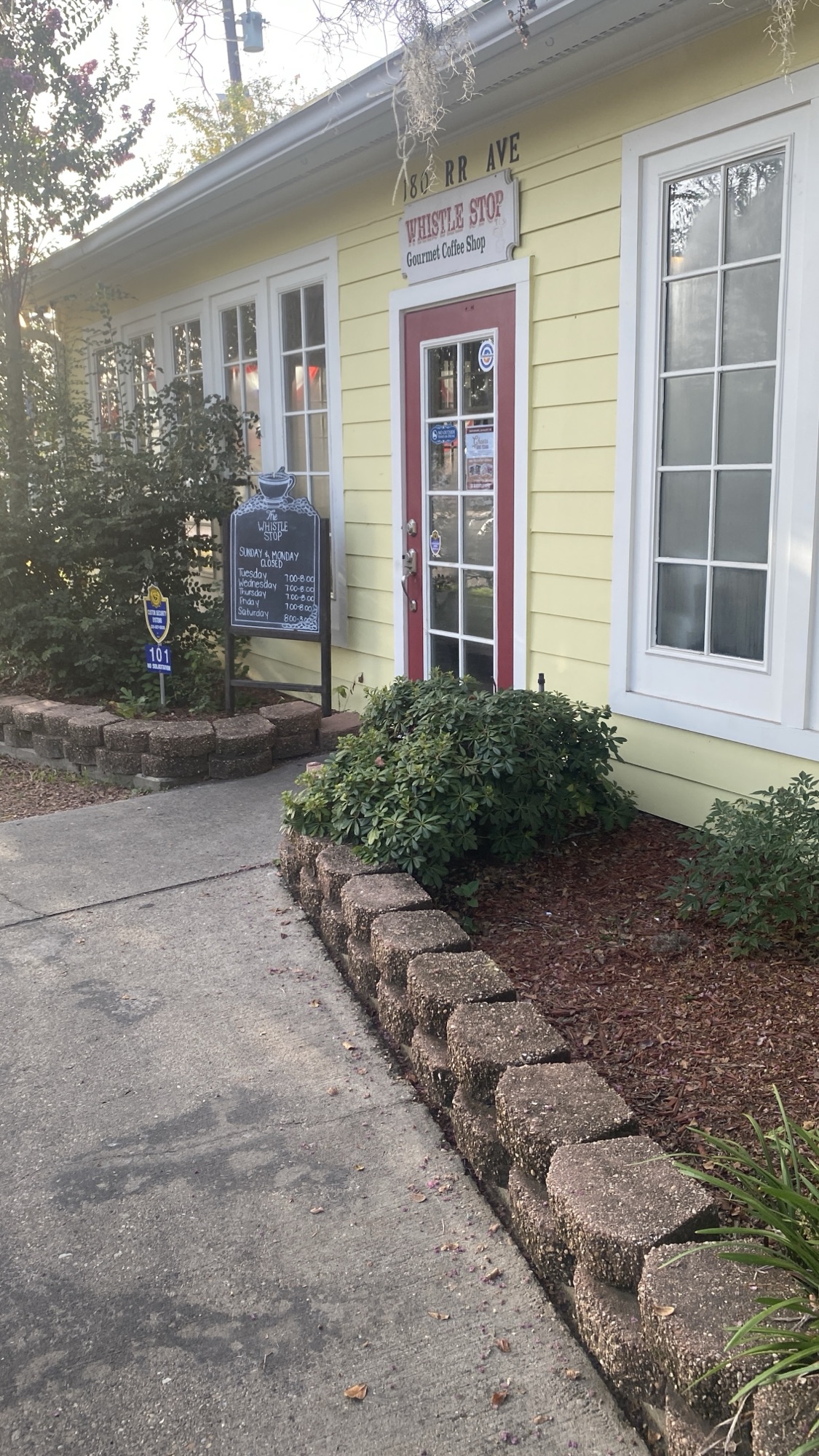
On a morning errand, we finally stopped at The Whistle Stop of Denham Springs. It was a quick stop, but we were glad we did. Come visit this lovely little place with us.
Hi, Again, Dear Readers:
Welcome to August, the “Dog Days Of Summer.” Call it what you want, but all three dogs are inside during the day. It’s just way too hot for them outside right now. We’re expecting at least one day next week of 100F temps. Stay hydrated and cool much as you can.
I know, it’s a bit early for a new blog post, but. . .I have something delicious to report.
Have you ever passed by a place and said to yourself, “I’m going to stop in there one of these days?” Do you pass by that place often enough to where you keep saying that, but you never do? Well, we did and finally visited. We are now wondering why we never did before.
Going to Denham Springs
Whenever James says he’s going to that area, to me, it’s just “Baton Rouge.” Denham Springs is more a suburban part around Baton Rouge, but is not in Baton Rouge. I’m not from this area, either, but he is.
On Thursday, we had an errand at the local machine shop before James went to work. After getting some more of that wonderful Bananas Foster coffee last week, I asked if we could return for another round. Unfortunately, the machine shop visit took longer than we’d planned and we were running out of time. That other coffee chain was a bit out of the way. When James got back, we had to do some dog wrangling before he made it out the door to get to work on time.
I didn’t mind missing the stop, so told James, “never mind, we’ll try again later, let’s just go home.” But he made a left turn at the light on Highway 16, and then another left turn into this friendly little place.

Looks like someone’s house, doesn’t it?
He pulled into The Whistle Stop.

Does someone live up there? We didn’t ask.
We’ve passed by this little coffee place in Denham Springs so many times.
The Denham Springs Antique District
This area is one with antique shops and other small businesses that have been there for a long time, just like The Whistle Stop. Everything has been there much longer than I’ve been here.

What you see from the street
Apparently, The Whistle Stop’s owners have recently changed, and they’re now owned by a young family with ties to the area.
As we were leaving, I think we said “hello” to the husband. James appeared to be the only male customer, and there was a man out back getting supplies out of a vehicle wearing a shirt with the shop’s name on the back. We didn’t ask.
It’s not lost on me that this Whistle Stop is somewhat reminiscent of the one from the film Fried Green Tomatoes, based on the book Fried Green Tomatoes at The Whistle Stop Café.

The Whistle Stop is located next to railroad tracks. It’s also a reminder of another coffee house I used to visit a long time ago.
Happy Customers
I’ve told James for many years that we needed to stop in “that little coffee shop over there.” Next time, right? Never seemed to happen. But of course, coffee shops aren’t his thing, until they are.

And there were quite a few happy customers enjoying their morning while we bought a takeout order. Didn’t take long, and we were back on the road.

On the way home, we became happy customers, too. (Keep reading.)

When I got to my desk, I looked up The Whistle Stop and found the website, Yelp page (unclaimed by the business but plenty of good comments), and 290 Google reviews. I’ll be adding mine soon, too.
Making The Stop
The Whistle Stop is a classic old-style neighborhood place. This is the front door:

A welcoming sight
Isn’t it cute? Although we didn’t spend much time there, it did seem rather small. That didn’t stop plenty of people from having breakfast or just coffee and pastry at 10:00 am. It was also very busy. I just wanted some hot java for the ride back.
James is of the opinion that coffee shops are not for him because he doesn’t drink coffee. But he is learning that coffee shops aren’t always just for coffee, either. Although the big chain with a green logo does not have Coca-Cola, regional chains and independent places do. So does The Whistle Stop, and he was happy about that.
Then he wanted something else for the road trip back to the Casa de Rurale.
The Most Heavenly Cookies
There were three types of cookies on cake stands under glass covers on the counter when we walked through the front door. The very nice lady at the register told us what each one was.

This nice lady waited on us both days.
James decided he wanted the cookies with chocolate chunks, macadamia nuts, and shredded coconut. They were quite large, and he requested two—one for now and one for later, since he was going to work in the afternoon.
Hmmm. . .”that sounds pretty tasty,” I said. Then he asked for three. The nice lady packed them up in a little white paper bag for us. She rang everything up along with my delicious hot coffee and James’ icy cold Coke. After scanning their QR code to get on their email list, we left. It was an hour-long drive back, so we couldn’t hang around. I didn’t even see the whole place.
The Angels Descend From Heaven
Once we got back on the road, I started nibbling my cookie. It was big, heavy, and almost a full meal. And that’s when it happened.

The most heavenly cookie ever.
The first bite was just incredibly delicious. Sweet, heavy, soft, chewy. So many flavors that just announce themselves at once.
Then I took the second bite. It was heavenly. I looked over and said to James, “I’m having a religious experience.”
He thought that was pretty funny until he took a bite of his, while he was driving. Thankfully, he did not experience rapture or anything else overly spiritual and continued driving without incident. But he understood.
James said he wouldn’t blame me if I ate the second cookie. I told him I’d split it with him, and he agreed. I broke it in half and we began experiencing additional enlightenment.

A little more heaven.
The cookies didn’t make it out of Livingston Parish. I don’t even think they made it out of Denham Springs. They were that good.
Later, he said, “I’m pretty sure those cookies were not gluten-free or anything like that.” No, probably not. But they were definitely worth the splurge on a fine Thursday morning.
An Unexpected Return Visit
Yesterday’s trip to the machine shop wasn’t completed. James didn’t have all the “oil rings” needed to complete a motor project. So, we got up much earlier this morning and went back to the machine shop to get them. The machine shop wasn’t yet open, so we again stopped at Whistle Stop.
That was the good news. The bad news is that those incredible cookies were gone. I guess everyone wanted a religious experience yesterday. Instead, we had breakfast, with coffee (me) and chocolate milk (James.)
For me, it was this delicious bacon/egg/cheese wrap with provolone, mushrooms and jalapeno peppers.

Oh, this was so delicious!
I thought they were bell peppers until I felt that heat. (A quick sip of chocolate milk helped.) James went with the safer and equally delicious bacon/egg/cheese biscuit.

Not his usual breakfast out, and he really enjoyed it, too. I told James he was off the hook for dinner out for a while.
Whistle Stop is an hour ride one way, so it’s not our usual hangout. We stopped there first and then drove to the machine shop five miles away. We made it home with plenty of time for dog wrangling and for James to get to work on time.
There Used To Be A Place. . . .
A long time ago, in a place far, far away (Metairie, Louisiana) was a similar establishment called Coffee Cottage. Much like The Whistle Stop, it too was in the most wonderful little old-style house, located on Metairie Road near the intersection of North Labarre Road.

This was such a wonderful place, too.
The house was a short drive from my little college-days apartment of the early- and mid-1990’s. Always friendly and welcoming, I loved going there. Took my friends there too, and my then-fiancé and I went there on occasional date nights. Even when we moved to Houston two years after the wedding, we tried to make sure to drop Coffee Cottage by when we were in town.
Post-divorce, while I was working for Boeing in Houston, I made the occasional NOLA weekend trips on my own. One weekend, I stopped there before I returned to Houston. It was the first time I had Bananas Foster coffee. When I went back to work on Monday, I told everybody in the office about that cuppa for two days. I’m sure they got tired of hearing about Bananas Foster coffee, but I never forgot it. There was also a second location over in Harahan, near where The E-Man lived.
In 2004, owner and chef John Caluda lost the lease on the little house property, and it was intended to be demolished for a bank. Coffee Cottage’s last day was December 24. The E Man told me about the closure, knowing I was visiting for the holidays. I was one of the final Coffee Cottage customers, driving in from Houston in the cold weather. That was the year Houston and New Orleans had snowfall and a “white Christmas.”
The next year (2005) was Hurricane Katrina. I’m not sure what’s there now, if the house is gone or what. Somewhere, packed in a box, I have some pictures of the place during its heyday. John Caluda transitioned into Cottage Catering and people still enjoy his delicious food.
The Whistle Stop reminded me so much of the old Coffee Cottage. Now I want to dig up those pictures from the closet and look at them again, ex and all.
We’ll Be Back
James isn’t always ready to try something new, but occasionally, he will. This time, it was mostly because we were close, and it turned out good. The second visit this morning was even better.

Today’s menu
Maybe next time we can hang out inside for a few minutes and enjoy ourselves a little. I told James that if we ever wanted to have lunch or dinner somewhere different, Whistle Stop would be a great place to do that.
The Whistle Stop is located at 180 E Railroad Ave, Denham Springs, LA 70726, and their number is (225) 271-8801. They’re open Tuesday through Friday, 7:00 am to 8:00 pm, Saturday 8:00 am to 3:00 pm, and are closed Sunday and Monday. Check out their menu before you go. They also do catering and sell larger containers of gumbo and soup:

You can pick up some food for later, too.
More to come soon. Meantime,
Happy Dining!