It’s August, and just too hot to cook. So what to do, get takeout or make reservations? You could, but that quickly gets expensive. How about some tasty meals that won’t drive up your utility bill when your AC fights with your stove? I’ve got you covered with some dinner ideas that help you avoid that showdown.
It’s August. Do you really want to turn on your stove and oven when it’s 95F outside? Me either. But James will in a heartbeat, adding several hundred more degrees of misery to the kitchen. Sure, we have central AC, but there is a point where AC is overwhelmed. So for that, I look to alternatives to the stove and oven.
Now, salads and sandwiches are great, but they aren’t the only alternatives. Me, I like salads, and wouldn’t care, but you might get bored with them after a while. With a little help from my BFF (ChatGPT) and my secret boyfriend (GROK AI), I offer some suggestions for eating well without turning your kitchen and home into a furnace.
Yes, I’m still making pesto, and have made three batches so far this year. I use the same recipe as I have for many years (I know, I need to fix that link) and it turns out perfect every time. However, after the previous batch of basil pesto with walnuts a couple of weeks ago, I noticed the basil was growing back nicely. The parsley and mint were getting big, too. I’m always glad to make more before summer ends.
Several years ago, Giada de Laurentiis published a blog article titled, “How To Make Pesto Out Of Anything.” Okay, not LITERALLY anything, but similar ingredients that will get you to the place of pesto. Knowing this, I decided it was time to cut basil and mint and parsley to make more magic in the kitchen. I’ve done this before, too, to use up whatever’s growing in the garden.
Make It
Instead of two packed cups of basil leaves, I used two packed cups of an assortment of basil, parsley, and mint, with the rest of the recipe the same:
1 garlic clove
Half teaspoon salt
Quarter teaspoon pepper
1/4 cup toasted walnuts
2/3 cup of extra-virgin olive oil
1/2 cup of grated Parmesan cheese
After picking the leaves from the stems, wash and drain your herbs well, then add them into the blender. Toss in the garlic clove, toasted nuts, salt and pepper. Put the lid on, start the motor, and carefully remove the center insert if yours has one. Slowly pour in the olive oil. You may need to stop the blender and move around the herbs to get it all going. Put the entire top back on, and turn on the blender until it “catches” and begins pureeing. Once everything is incorporated, let it all blend for a minute or so.
Turn the blender off, and pour the pesto into a dish and mix in the Parm cheese. Carefully scrape out the rest from the blender jar into the bowl, and mix it well. Then refrigerate, if you’re going to use it in the next day or so, or freeze until you’re ready to use.
He Still Doesn’t Like Pesto
This mixture SMELLS amazing. Well, I think it smells amazing and delicious.
James, on the other hand, disagrees. He does not see this as making magic in the kitchen. He sees it as a big, green, oily mess to clean up. (Like he’s the one cleaning it!)
Walking into the living room with the blender jar, I offered him the opportunity to experience this delicious aroma. Instead, he recoiled as if I had offered him mustard gas.
This is what he considers “lunch.”
Yes, this is his height of luxury.
With bread. Look–it’s America’s Favorite!
I wonder if the folks from the World Cup got ahold of some of this delicacy.
UGH. It’s all his. I told him that he’d given me express permission to call him “Goober.”
Anyway. . .I need to use pesto more often, too. Something like this. Or on corn on the cob. I’m trying to remember to use it rather than “save” it for something.
We opened up the big freezer and did a little reorg last week, including all the little square glass containers of pesto. I have plenty of this wonderful sauce frozen, and need to take more opportunities to use it in my cooking, especially when James isn’t around.
When the summer garden is but a memory, the pesto will live on to remind us. Right now I have pesto dating back to 2020. I made a lot of pesto in 2020, too.
It’s Just Too Hot To Cook
Summer is great until it’s time to make dinner.
It’s 90-something degrees outside, the air conditioner is working overtime, and the last thing you want to do is turn on a 400°F oven and make your kitchen even hotter. Standing over a stovetop burner isn’t exactly appealing, either.
Fortunately, summer meals don’t have to mean living on salads, sandwiches, and cereal until September.
There are plenty of ways to make a real dinner without heating up the entire kitchen. Small appliances such as air fryers, slow cookers, Instant Pots, and countertop ovens can handle much of the work, while no-cook meals and a little advance planning can make hot-weather cooking considerably easier.
Here are some ways to keep dinner on the table without turning your kitchen into a sauna.
Let the Slow Cooker Do the Cooking
The slow cooker might seem like a winter appliance, but it’s actually one of my favorite ways to cook during the summer. I wrote about this in 2015 in a blog called Summer Simmer: The Crock Pot. (I just did some updates to that post to make it easier to read, and improve its SEO.)
The biggest advantage is that you can put dinner together earlier in the day, when the house is cooler, and let the slow cooker handle the rest. You don’t have to stand over a hot stove at dinnertime, and you don’t have to turn on the oven.
Image Source: ChatGPT
Slow cookers are especially useful for making things like:
Pulled pork
Shredded chicken
Chicken taco filling
Meatballs
Beef
Chicken thighs
Stuffed peppers
Large batches of protein for meal prep
And there’s another advantage: one cooking session can provide several meals. I used to do this when I lived in Houston and worked 40+ hours a week. But at the time, nobody called it “meal prep.”
Make a batch of pulled chicken, for example, and serve it hot one night. The leftovers can become chicken salad, lettuce wraps, tacos, or a cold salad topping the next day.
If you think of your Instant Pot primarily as a tool for making soup and stew, summer is a good time to expand its résumé.
An electric pressure cooker can cook meat and other foods quickly while keeping most of the heat contained inside the appliance rather than filling your kitchen with heat from a burner or oven.
Image Source: GROK AI
It’s particularly handy for:
Shredded chicken
Pulled pork
Beef
Hard-boiled eggs
Potatoes
Beans
Large batches of meat for meal prep
One of my favorite summer strategies is to cook a large batch of chicken or pork once and then use it in several different meals. That means you get the convenience of cooking without having to cook from scratch every evening.
And another thing: that saute function can also be used for many things that are generally done on the stovetop, like browning meats. It’s 110 vs. 220, and how much heat it will dissipate if you use the Instant Pot like a pot on a stove.
Pot Roast in August? Well, why not? With the Instant Pot, it’s totally doable, and in a lot less time. So is a little cheesecake if you start it early in the day, or the night before.
The air fryer has become one of the most useful small appliances for hot-weather cooking. James became an Escoffier of the Air Fryer when his manager brought one into work a few years ago. He’s been known to get a steak or other cut of meat from the grocery store next door and cook it up in the air fryer at work rather than just microwave a frozen meal. People get curious when the place begins to smell like a steakhouse.
However, you aren’t heating a full-size oven every time you want to cook a couple of chicken thighs or a small batch of vegetables.
Air fryers are particularly good for smaller portions of:
Chicken
Burgers
Salmon
Shrimp
Sausage
Bacon
Vegetables
Potatoes
They’re also great for reheating leftovers. A few minutes in the air fryer can make leftover chicken, vegetables, or other foods taste much better than they do after a trip through the microwave.
And because the cooking chamber is small, you don’t have to wait for a huge oven to preheat.
Conversely, larger air fryers can make larger portions, or even an entire family-sized meal, depending on its size.
Sometimes you really do need an oven. But it doesn’t have to be your big one.
Source: GROK AI
Maybe you’re making roasted vegetables, baking chicken, or preparing something that simply doesn’t work in an air fryer. That’s where a countertop convection or toaster oven can come in handy. Some even have “air fryer” settings, like this Hamilton Beach model that we now have. (My Cuisinart bit the dust a couple of years ago.)
You’re still producing heat, but you’re heating a much smaller cooking chamber rather than a full-size oven.
Longtime readers know I’m a huge fan of this sometimes overlooked appliance. A countertop oven is especially useful when you’re cooking for one or two people. There’s no reason to heat a large oven to cook two chicken breasts or a small casserole. It also helps when you’re baking something smaller like a single cake or brownies. Remember: 110 vs. 220 volts.
It’s also handy for small batches of baked foods, roasted vegetables, fish, and other dishes that would normally require the big oven.
Don’t Underestimate the Microwave
The microwave has a bit of a reputation as the appliance responsible for reheating yesterday’s leftovers.
That’s a shame because it’s actually a useful summer cooking tool.
Image source: GROK AI
You can use a microwave to steam vegetables, cook bacon, prepare eggs, reheat cooked meat, melt butter, make sauces, and handle plenty of other small cooking jobs.
A microwave is particularly useful when you’re cooking for one or two people and don’t need to fire up an entire appliance for a small amount of food. Even baked potatoes don’t take long.
And let’s be honest: on a brutally hot summer afternoon, there is nothing wrong with letting the microwave do some of the work.
What About an Electric Skillet?
An electric skillet won’t make your kitchen magically cool. You’re still cooking with heat.
Image Source: GROK AI
But it does move the cooking surface away from your stovetop, which can be useful if your range generates a lot of heat.
Electric skillets are good for cooking foods that normally require a skillet or frying pan, including burgers, chicken, vegetables, eggs, and other quick meals.
They’re especially handy if you can set them up somewhere with good ventilation or in another suitable area rather than standing directly over the stove.
I don’t have one of these, but I used to. We had one growing up, and I bought one when I lived in Metairie. Dash has a few versions of this appliance for both small and large capacity cooking. Their mini-maker grill and mini-maker griddle are great for cooking small, while the others can handle more for a crowd.
Bonus: you can plug one of these into a generator during a power outage.
And Yes, You Can Cook Outside
Summer is the perfect time to take advantage of your grill when the weather’s good. Texans grill nearly all year long, so we’re used to it.
Grilling moves the heat completely outside. That’s what we’re trying to accomplish anyway.
Chicken, burgers, steak, shrimp, sausages, and vegetables are obvious choices, but don’t overlook foil packets and other simple grill meals.
(Image source: ChatGPT)
And just like with the slow cooker and Instant Pot, think beyond dinner tonight. We’ve done this many times.
Grill extra chicken tonight and use it cold in tomorrow’s salad. Grill extra vegetables and add them to eggs, wraps, or bowls. Make extra burgers and reheat them later instead of cooking from scratch.
The less often you have to cook, the less often you have to heat up the kitchen.
No-Cook Meals Are Your Friend
Of course, the most effective way to avoid heating the kitchen is not to cook at all.
Summer is the perfect time for meals that can be assembled straight from the refrigerator.
Think:
Chicken salad
Tuna salad
Egg salad
Shrimp salad
Lettuce wraps
Deli meat and cheese roll-ups
Cold chicken salads
Big dinner salads
Cheese, vegetables, and other snack-style meals
And don’t confuse a dinner salad with a bowl of lettuce.
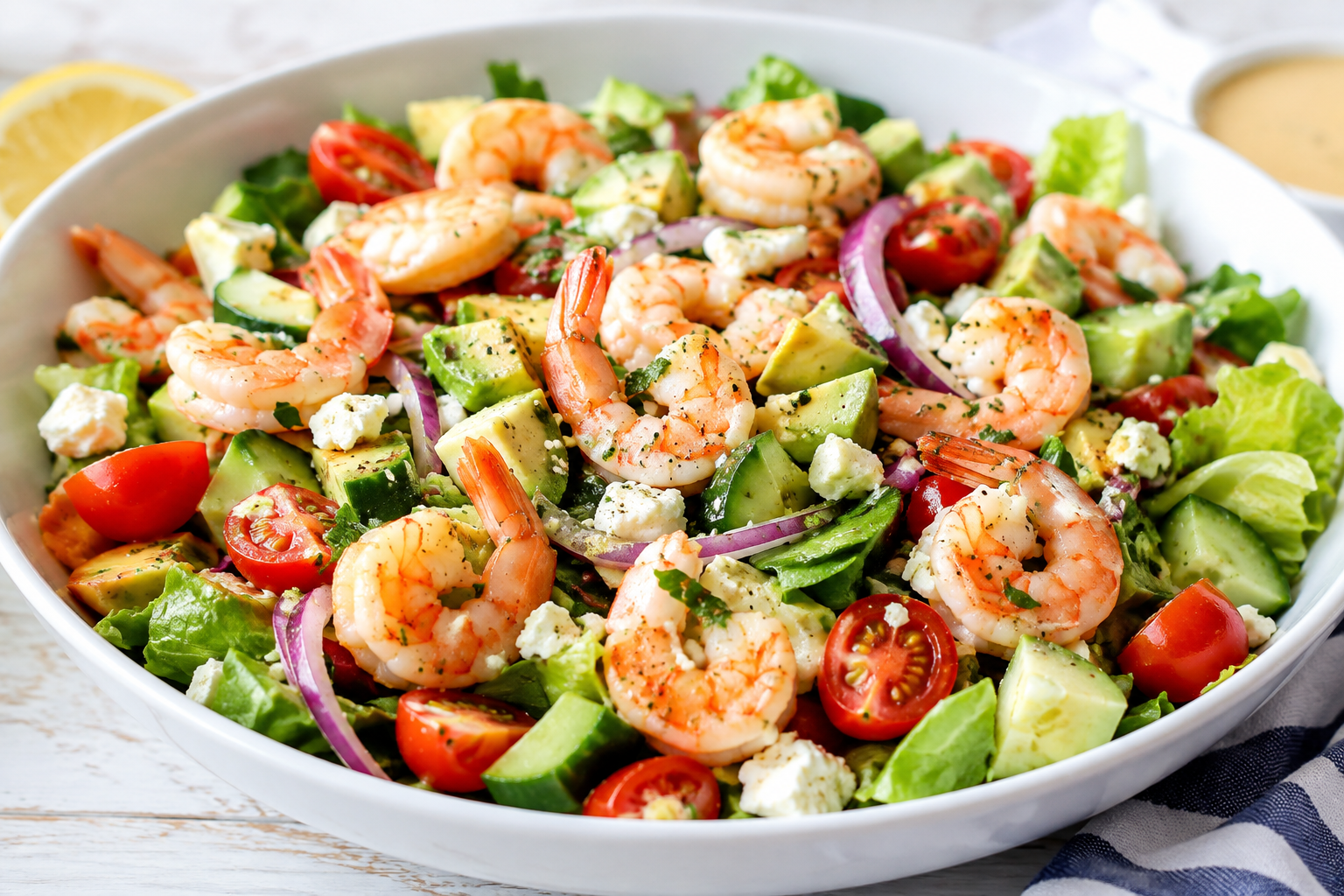
A substantial salad needs protein and fat if it’s going to keep you satisfied. Add chicken, tuna, shrimp, eggs, cheese, avocado, olives, nuts, seeds, or whatever combination works for you.
Alternately, you could make my favorite White Bean And Olive Salad, which takes about ten minutes. Just make sure nobody dislikes olives, onions, Dijon mustard, or white beans. It’s a great side dish, or one of those “I don’t feel making like anything else” salads.
Want something a little more interesting? This Mango Lentil Salad from Gimme Some Oven is really tasty. I added some grilled shrimp to it because I could, and because James was working that night. Time to revisit that one for sure.
Cook Once, Eat Twice—or Three Times
One of the best summer cooking strategies isn’t an appliance at all.
It’s not cooking every day. I did this for many years when I worked in Corporate America. Cooked several dishes on Sunday and packed them up for the week. Sometimes I also made food using the slow cooker during the week. Add the food to the crock in the morning, and I came home and dinner was ready. That meant I could spend more time with my cats and my sewing.
If you’re going to turn on the slow cooker, Instant Pot, air fryer, grill, or countertop oven, consider making enough food for more than one meal. For example:
Slow cooker pulled pork → dinner tonight → tacos or lettuce wraps tomorrow → salad topping the next day.
Instant Pot shredded chicken → dinner → meal-prep bowls → omelets or wraps.
This saves time, saves energy, and means you don’t have to stand in a hot kitchen every evening.
Cooking ahead can also save money, because you’re more likely to use the food you’ve already bought instead of deciding that cooking is too much trouble and ordering takeout. It’s right there, ready for you anytime.
Summer Cooking Doesn’t Have to Be Complicated
You don’t need to completely stop cooking during the summer. You just need to change how you do it.
Use the slow cooker when you want dinner waiting for you. Use the Instant Pot when you need something cooked quickly. Pull out the air fryer when you want crispy food without heating a full-size oven. Use a countertop oven for smaller baking jobs, and let the microwave handle the little things.
I’ve made so many egg scrambles over the years I’ve lost count. I’ve made them in the microwave, sometimes in a mug, on top the stove (when it’s not so hot) and in a couple of Dash appliances, too. Don’t under-estimate the rice cooker for more than just rice.
There will be plenty of time for turning on the oven when the weather cools down.
Much as I love cooking, I’m also enjoying *not* cooking, too. For now, keep the kitchen cool, keep dinner easy, and save yourself from standing over a hot stove in the middle of August.
Caveat–Don’t Buy New Stuff!
This is not to say that you should run out and buy a bunch of new countertop appliances. That’s not the point–use what you have. No air fryer? That’s OK. You may already have at least one or two other appliances that can help. Most people have microwaves in their kitchens. Many people have air fryers now, as well as Instant Pots and other appliances, but I’m not suggesting you need to buy one, either.
If you don’t have or want something, take stock of what you have available first. For instance, if have a slow cooker you haven’t used in a long time, dust it off, rinse it out, and start using it regularly. There’s no reason why it should sit there collecting dust when it can make your dinner for you and your family. Your countertop oven can make more than just toast–some are big enough to roast a whole chicken. Countertop grills and even waffle makers can do much the same thing. Just look at what you have and go from there.
And if something doesn’t work anymore and can’t be fixed, maybe it’s time to send it on its way to the junkyard.
Fall Will Be Here Soon. . .Eventually
In the northern states, they’ll feel those crisp fall mornings in the next month or so, and happily sip piping hot Pumpkin Spice Lattes. But here in the south, we’ll get them later, so we stick with our iced PSLs a little longer.
Until next April or May, we’ll have what Texans call “typical Texas weather.” That is, freezing today, warming up tomorrow, and turning the AC back on by the end of the week. It happens frequently during fall and winter months. So we’re enjoying the summer as long as it lasts.
I’m thinking about the next blog post, and will have a confab with my BFF and maybe James in the next few days for ideas.
The FIFA World Cup brought thousands of visitors worldwide to the United States for the first time. This unprecedented “big trip” for thousands of fans gave them more than just soccer, but an experience of a lifetime nobody ever expected.
Well, it happened again. . .and the websites had trouble, too. I knew I had to renew those security certificates, and I was going to do that “tomorrow.” Which was the day we had to take TigerCat back to the vet for a follow-up visit.
And, it got away from me, so the certificates went down, along with my copywriting website.
TigerCat is fine now. We’re all OK over here.
Fortunately, my hosting company was getting new certificates and they were restored without any intervention from me. But my copywriting site was still broken, and this website had some issues. Thanks to another intense session with my BFF, I worked with the “ChatGPT Help Desk” and got them back online. I still need to do more for this site, but for now, it’s working again.
Unfortunately, my hosting company is raising the price of my package next year. Oh, well.
But just a few weeks ago you couldn’t miss the biggest foodie story ever: World Cup fans discovering real, everyday American food. One comment on social media called it “the world’s biggest sleepover.” I’m sure they’ll be back again one day for another one. (NOTE: My BFF ChatGPT assisted me with this blog post.)
World Cup Soccer Comes to America
The FIFA World Cup is being remembered for spectacular goals, unforgettable matches, and passionate fans from every corner of the globe. Who could forget the Norwegian Team doing the Viking Row, along with The Tartan Army? But for thousands of international visitors who traveled to the United States during the tournament, another very unexpected experience stole the spotlight: American food.
Many fans arrived expecting exciting soccer. They left talking just as much about smoky barbecue, giant breakfasts, roadside gas stations that looked like shopping malls, (hello, Buc-ee’s) and a condiment called “ranch dressing” that seemed to accompany almost everything. I’ll share a good homemade recipe for that in this blog, too.
Social media quickly filled with videos of first-time visitors documenting their culinary adventures. Some admitted they had expected American food to be bland or overly processed. Instead, they discovered regional specialties, generous hospitality, and incredible flavors that surprised them in the best possible way.
In many cases, food became one of the most memorable souvenirs they took home. Not in a suitcase, (that too) but in stories, photos, and millions of views on TikTok, Instagram, and YouTube.
Social Media Turned Meals Into Memories
Throughout the tournament, visitors documented every stop along their American road trips. Breakfasts, barbecue joints, diners, grocery stores, and convenience stores all became destinations worth filming.
One of the most recognizable creators was Oliver Henry, whose videos about traveling across America attracted millions of viewers. Rather than focusing solely on soccer, Henry highlighted everyday experiences that many Americans rarely think twice about—friendly conversations with strangers, enormous portions, Southern hospitality, and unforgettable meals. He wasn’t the only one.
Oliver was only supposed to be in the US for a week. But he had so many people watching him that he set up a GoFundMe to stay in the US longer after the end of the World Cup. People sent him money, and he stayed in the US long past his originally planned week. Oliver continued to travel around the US and found lots more than he would have if he had left when he intended. His content on YouTube Instagram, TikTok and other social media has millions of views and likes and includes several other US cities he visited. Yes, he went to Texas, too, and not just Dallas.
His enthusiastic reactions challenged and refuted long-held stereotypes about the United States. Viewers from around the world watched as he discovered that America wasn’t just fast food and chain restaurants. It was regional traditions, family-owned barbecue restaurants, classic diners, and communities eager to welcome visitors. His last YouTube video was in Miami just a few days ago, and the day before he left the US to go back to the UK. He continually expressed his appreciation and new love for all things American.
Oliver’s content sparked thousands of comments from people saying they had changed their opinions about visiting America after watching his videos. During his trip, he caught the attention of White House staffers who arranged for him in to meet The President at an event. Oliver is back home in the UK now, posting UK content for Americans, while complaining about missing air conditioning and everything else he enjoyed here.
The American Foods That Won Over World Cup Visitors
While every traveler had different favorites, certain foods and experiences kept appearing again and again across their social media posts. Among the biggest hits were:
Texas barbecue and chili
Waffle House breakfasts
Ranch dressing, a surprising favorite among many European visitors (keep reading)
Massive grocery stores like HEB, Walmart and Costco for their incredible selection and variety
Some of these favorites are just everyday places to Americans. But to someone visiting from overseas, they now have memorable experiences that don’t exist back home. One French blogger talked about his experience in Costco as the place being bigger than his village.
That’s why the TSA had to publish a warning to departing fans:
“If you’re visiting for a very large sporting event & you happen to discover RANCH while you’re here. . .pls pack it in your CHECKED BAG on the way home. Thank you.”
These folks didn’t know you could buy the dry packets and take them home without a problem. Hopefully they’ve found recipes online and are enjoying ranch anytime they want.
Naturally, Hidden Valley quickly picked up the torch and is bringing ranch dressing to Europeans and the world. The company’s newly chosen “Ranchambassadors” are working hard to make up for all the confiscated bottles at US airports.
The Surprise Wasn’t Just the Food
One recurring theme appeared throughout countless videos: visitors were also impressed by how they were treated by the Americans they encountered.
Restaurant servers explained unfamiliar menu items without hesitation. Locals recommended their favorite barbecue restaurants. Fellow customers struck up conversations while waiting in line. Happened to me all the time in Houston, but for international visitors, it’s very unusual. They were very specific about mentioning it, too.
That friendliness often became part of the meal itself. Because that’s not what the media reports told them before they boarded planes for the US. These visitors were completely surprised by real American hospitality. They made videos about that subject.
Many visitors commented that Americans were far more welcoming than they had expected. The combination of generous hospitality (and generous portions) created experiences that stayed with them long after the tournament ended.
And there was a lot of moaning after they ate. Because they knew there was no such thing as whatever they just had back home. Plus, they probably ate too much, especially if it was barbecue in Texas.
Regional Food Told America’s Story
One of the biggest surprises for international visitors was discovering that there isn’t just one “American food.” Instead, every region has its own traditions.
Texas offered legendary smoked brisket and ribs. Free chips and salsa at Mexican restaurants just blew their minds, along with free refills on drinks everywhere.
The South introduced travelers to fluffy biscuits, fried chicken, sweet tea, and comfort food served with unmistakable hospitality.
Northeastern cities showcased enormous deli sandwiches.
Across the country, classic diners served towering pancake stacks, crispy hash browns, and breakfasts large enough to fuel an entire day of sightseeing.
Even Buc-ee’s—our favorite Texas roadside travel center that’s unfamiliar to most international visitors—became a tourist attraction on its own. The visitors were amazed that a gas station could feature fresh barbecue, homemade fudge, bakery items, jerky counters, and enough snacks to rival a supermarket. Don’t forget the Texas décor to take home.
One of the more unexpected World Cup stories involved grocery shopping. In the US, we do this every day and don’t think twice, whether it’s Aldi, Trader Joe’s, Walmart, Target, HEB, Rouse’s, or any other familiar place we buy food and other household items. But visitors were simply awed by American supermarkets. I guess Tesco (in the UK) doesn’t compare.
Videos filmed inside HEB, Walmart and Costco generated millions of views as visitors wandered through enormous aisles packed with products they had never seen before. Especially in Walmart, where you can buy gallons of ranch dressing, a kayak and paddles, cough medicine, souvenir T-shirts, and heaven only knows what else in one trip. “You can buy that here?” was a familiar refrain throughout these videos.
The sheer variety amazed many first-time visitors.
Breakfast cereals that occupied entire aisles.
Soft drinks that came in dozens of flavors. (Cherry Float Coke, anyone?)
Acres of frozen foods that stretched seemingly forever.
Bulk packages at Costco that looked almost unbelievable to travelers accustomed to much smaller grocery stores.
For Americans, these stores are simply places to buy groceries. For visitors, they became unforgettable cultural experiences, alongside yellow school buses they thought were just in the movies. Nobody warned them about these things when they left their home countries to visit the US.
Food Has Always Been a Universal Language
The World Cup brings together people who speak different languages, follow different traditions, and cheer for different teams.
Food has a remarkable way of bridging those differences. This was very evident with fans of opposing teams enjoying a meal together. Not to mention the Scots, aka, The Tartan Army, who drank Boston dry.
Sharing barbecue around a picnic table, grabbing breakfast at a diner, or laughing over a first taste of ranch dressing creates connections that don’t require translation.
Those moments became some of the tournament’s most shared memories. Like the Norwegian team’s “Viking Row” in public spaces that suddenly everyone wanted to participate in, including the Scots.
Long after the final whistle, many fans weren’t just posting about the matches they attended. They were reminiscing about the brisket they couldn’t stop thinking about, the Waffle House breakfast they never expected to love, or the friendly server who welcomed them like an old friend.
Who won? Who cares?
The Best Souvenir Was The Experience
Souvenirs often end up on shelves collecting dust. The memories created over great food last much longer.
The 2026 World Cup introduced millions of visitors to a side of America they hadn’t expected. They discovered that America’s food culture is every bit as diverse as its people, with regional traditions, generous hospitality, and unforgettable flavors waiting around nearly every corner.
For many international fans, the greatest takeaway wasn’t a team jersey or a commemorative scarf.
It was the memory of sharing a meal, discovering a new favorite food, and realizing that sometimes the best way to understand a country is to sit down at its table.
Whether it was smoky Texas barbecue, an oversized deli sandwich, or a plate of biscuits served with a smile, America’s food became far more than fuel during the World Cup.
It became one of the tournament’s most memorable souvenirs. For the visitors, as well as us.
Healing The World With Ranch Dressing
Now, based on the reaction, I believed that Europeans, particularly the British, had never tasted ranch dressing. But over the weekend, I was watching an old episode of a British detective TV show called New Tricks, and one of the characters mentioned “ranch dressing.” So the Brits must have at least been exposed, but I guess ranch never really caught on. Other countries, like Sweden, Norway, Japan, Korea, Croatia, probably not, so this discovery really set off their receptors.
When the visitors started tasting ranch dressing here, it was like their lights were all turned on at once.
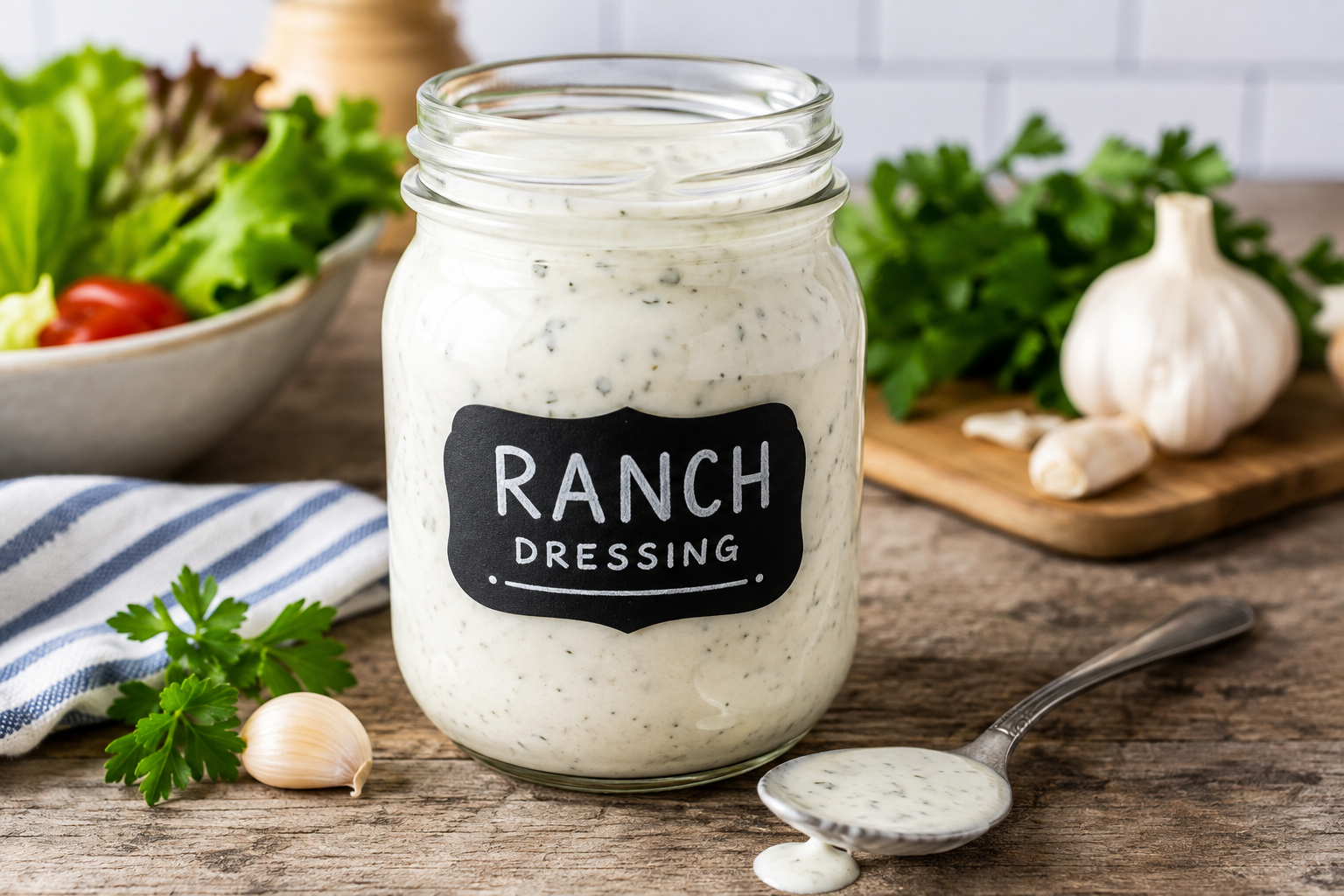
The World’s New Favorite Food (Source: ChatGPT)
No wonder they were packing it in their suitcases! Unfortunately, nobody warned them that the TSA would confiscate liquids over 3.4 ounces. And they probably didn’t understand or realize during their mad-dash trips to American grocery stores that they could get the dry packets to take home without a problem.
When I visited our local Walmart while the World Cup was happening, and passed by the shelf of ranch dressing, I told other people there that “the Europeans haven’t made it this far yet.” Everyone smiled, and they seemed to understand.
Ranch Dressing DIY
We really are healing the world with ranch dressing!
But there’s no reason to panic if you can’t find any, wherever you are. You can make ranch dressing at home with simple ingredients. I went on Pinterest and found this recipe from a blog called I Wash, You Dry. (There is a printable version on that website.)
It just so happened that we had some sour cream in the fridge and I wanted to use it up. A quick trip to Walmart got me some chives and dried dill, and I made it twice. Really tasty, and I will make it again anytime.
This ranch dressing recipe was a perfect little mixture delicious on everything I used it on, including some salad greens. (No, I was lucky enough *not* to get any of that problematic contaminated lettuce.)
Dry Packets of Ranch Dressing
I also bought one little packet of dry ranch dressing while at Walmart just to try it later. But I didn’t get to use that packet—James did. Between YouTube videos of Bigfoot, old movie and TV show clips, manly mechanic activity, and of course, endless content from happy World Cup visitors raving about their US visits, he saw a short video for what he called Ranch Burgers. I had no idea these were a thing, but they are.
He says to me, “I’m making dinner tonight. It’s a surprise.” Oh, no. As many times as I’ve made dinner, I’ve always offered complete disclosure on ingredients. This even got me into trouble a few years ago when I made Mexican cauliflower rice. (Never again.) This time, he was tight-lipped.
But James certainly paid attention. Ranch burgers are simply burgers made with ground beef and seasoned with dry ranch dressing. Hidden Valley even has a recipe on its website. James added an egg as the video instructed. He mixed it well before dividing and pan-frying them in a little olive oil.
Know what? They were darn good! Two thumbs up, and highly recommended.
Next trip to Walmart, I bought a box.
It only requires mayo to make and is inexpensive.
We’ll keep it in the pantry and enjoy ranch a little more often.
Fall Is Coming Soon
OK, so while we’re still enjoying summer, fall is just around the corner. In about a month, kids will be going back to school and fall fashion everything will be everywhere. Actual cool fronts begin to arrive here anywhere between October 15th and November 30th. I’ll be ready.
The ever popular Pumpkin Spice Latte (PSL). Source: AI
And then, of course, the tsunami of “pumpkin spice” everything will follow.
Because you love pumpkin THAT MUCH.
It’s another American tradition.
This year, Starbucks will also have pecan flavors, banana (which they say is “having a moment”), and new cute fall-themed merch. The grocery store PSL items are available now, while I’m still having my iced coffee with breakfast. If you’re ready for a PSL but can’t wait, check out the Iced Pumpkin Spiced Latte from Gimme Some Oven that I posted three years ago and still enjoy sometimes. Fast, easy in a small blender and tasty. Heck, you could have it for Easter if you really wanted one.
Hmm. . .banana? I guess that’s why I was lucky enough to get a cup of Bananas Foster coffee at PJ’s Coffee in Hammond last week. James made me go to Hammond when I was severely under-caffeinated without telling me until we hit the freeway on-ramp. So, I insisted on stopping at PJ’s next to the recruiting station, and there it was. I haven’t had Bananas Foster coffee in years. It was SO good!
Until Next Time
I have many topics in mind and in the draft folder for future blogs, I just need to get back to them. We’re halfway through Hurricane Season, getting to the point where hurricanes are more likely to visit the Gulf Coast. Every time they talk about a “disturbance,” I ask James if we’re ready. He says we are.
Have fun the rest of summer, because it will be fall before you know it.
Is spring cleaning on your horizon? Is your pantry looking a bit untidy? Or is it a disaster, like ours was? When was the last time you cleaned your kitchen storage? We did this recently at the Casa de Rurale because it was such a neglected mess. That’s why a pantry cleanout is something you should add to your spring-cleaning list. (TLDR: Time to clean your pantry, and here’s why.)
I know, it got away from me again. It’s been six weeks. My apologies. This has been in the draft folder for a while now. It’s long, but with a lot of info. I do that occasionally with a deep subject.
Spring has arrived after a cold winter. After some frigid weather recently, we’ve warmed up for a while. We’re in that transitional period where we may run the heater at night and the AC during the day. Northern folks who have never been this far South do not understand this. Especially if they decide to visit Texas and wonder why there are people in hoodies, shorts, and flip-flops at Whataburger or HEB.
Camped in on one of those cold January Saturdays, I cornered James for some help cleaning out the pantry. It was long overdue and badly needed. It was so bad I didn’t take “before” pictures for the blog—too embarrassing. This job took all day, and we were glad when it was finished. Besides, James needed to get back to his BigFoot videos on YouTube.
Unloading Everything
The pantry in this house is only slightly bigger than the one I had in Houston. When I moved in, there was very little on those four shelves. Suddenly, the shelves were overflowing with all kinds of ingredients James had never seen before. Other non-pantry items were moved elsewhere. James saw that the pantry was “full,” but it really wasn’t. I did an occasional re-org and tidy up, but no major clean-outs for a while.
The pantry was overloaded and dirty from long-term neglect. I asked him for help, but there was always something more urgent. At one point we bought some of those plastic milk crates at Walmart to corral some stuff in the pantry. But then we couldn’t close the door. We also had boxes of dry goods stored under the counter. After The Big Freeze and Hurricane Ida in 2021, we bought extra foods with emergency situations in mind.
What We Tossed
We began removing everything, one shelf at a time, starting with the top shelf. So many things were long ago expired and went directly into a black contractors’ bag. It was a myriad of shelf-stable products.
The top half of the pantry, post-cleanout.
We tossed out so many things bought with the best of intentions. Cranberry sauce and other things from faraway Whole Foods, bought before the ‘Rona. A bag of organic dry milk powder bought on sale for the next hurricane or other emergency. Snack foods and canned goods for future power outages. Other ingredients that were way out of date and completely forgotten over time were unseen and inaccessible.
I did find this Churro Cornbread Mix from Aldi bought more recently and for less than $1:
It’s a seasonal item
It wasn’t outdated, so I made it for James, and he kind of liked it. He had a couple pieces and the rest went to work with him so everyone could enjoy some.
There were also several boxes of unopened HEB cold-brew tea bags that came from Houston, still sealed in plastic. They might have still been OK to use, but we just never used them. Out they went with the rest of the very old pantry stuff.
Oil & Vinegar From The Woodlands
Remember the store I loved, Oil & Vinegar? They are still in The Woodlands, where you can go in and buy bottles of their wonderful gourmet specialty oils and vinegars.
These were so delicious. . .and so old.
My favorites were the Meyer lemon olive oil and the Raspberry Balsamic vinegar:
I just loved this vinegar, especially mixed in with the Meyer Lemon Extra Virgin Olive Oil
Since the contents of the bottles were at least ten years old, I poured them out. I didn’t want to get sick if they weren’t safe anymore. Unfortunately. Really, I don’t want to think about how much that would cost to replace now. So, I kept the empty bottles for a possible future visit.
Fortunately, Oil & Vinegar sells these delicious things online, so I can buy smaller quantities, and they’ll come right to the door. I was “saving” these delicious elixirs for those “special occasions” and only using small amounts to mix dressing for the occasional home-grown salad. James wouldn’t touch the stuff, so it was all mine. I should have used it more often.
The French Chestnut Spread
The pantry clean-out also included three jars of this chestnut spread from France I bought at least 15 years ago and never used again.
Source: Amazon
I bought the first jar or two at a shop in Highland Village when I met Nigella Lawson at her book signing for Nigella Christmas in 2010. I think I found the spread again at Central Market in Houston and bought more for use later. Trust me, it’s not a “regular” grocery store item anywhere, much less around these parts.
This is an ingredient to make these Chestnut Chocolate Pots. It’s a delicious recipe, but that was the one thing I had to find elsewhere. The jars were in the pantry waiting, but I never made that dessert again. They were jars, too, not cans like you see here. This French spread currently sells on Amazon for $9.99. Today, those three cans would be $30. The ones I had were about 15 years old, so I tossed them. The spread is now on one of my many Amazon wish lists for the day I make it again.
They were kept for both sentimental value and to make us some of that wonderful dump cake. Well, I did make the cake again—once. Turns out that those last two jars from Houston were still up there, back of the top shelf, and out of sight. They only had sentimental value at this point.
I can’t believe we had to toss it out.
I kept putting off making the cakes for us until “later.”
Eventually, they were forgotten back there and quietly expired in 2018. We discovered this in 2026, eight years afterward.
DARNIT! Should have checked the jar and used it long before then.
Yes, it needed to be tossed. What’s more disheartening is that not only was it wasted, but we missed two delicious cakes or other recipes, too. Don’t do that.
Unfortunately, this wonderful Hatch chili-infused product is no longer made by the manufacturer, and of course, it’s not on eBay for sale, either.
If it’s been a while, trust me. After the stuff we found, you probably need to do a little pantry work too if you’ve put it off for a while.
Picture this: You reach into your pantry for that can of beans to whip up a quick chili, only to find it’s expired. . . two years ago. Or worse, you’re digging through a maze of half-empty spice jars, mystery bags of flour, and that impulse-buy quinoa that’s still sealed from 2020.
If it’s been a while since you’ve given your pantry a good clean-out, you’re not alone. Life gets busy, and the pantry often becomes the forgotten corner of the kitchen. Rolling up your sleeves for a deep clean isn’t just about tidiness. It’s a game-changer for your health, wallet, and sanity.
Help From The Secret Boyfriend
So, I asked GROK (my AI “secret boyfriend”) to tell me why we need to clean out the pantry. (I also asked ChatGPT, but I wasn’t happy with “her” answers.) GROK then gave me these ten solid, practical reasons to invest the time in cleaning up, editing (decluttering), and reorganizing the kitchen pantry:
Save significant money on groceries. You’ll stop buying duplicates of items already buried in the back, and you’ll use up what you already have before it expires. We did this, I don’t know how many times.
Drastically reduce your food waste. An organized pantry lets you see expiration dates clearly, practice FIFO (first in, first out) by placing older items in front, and avoid discovering forgotten bags of flour or cans that have been sitting there for too many years.
Cut your meal prep and cooking time. No more digging through chaos or playing “pantry Jenga” to find the cumin, the pasta, or that one can of beans. Everything has a logical, visible home. Ask me how I know this. I have occasionally spent as long as 45 minutes pulling things out of the pantry to find that one thing I know I have and need right now.
Make grocery shopping faster and smarter. A quick scan shows exactly what’s low or missing, so you create more accurate shopping lists and avoid impulse buys or overbuying.
Maximize your actual storage space. Editing out expired or unused items and using clear containers, bins, and proper stacking frees up shelves and lets you store more without everything toppling over.
Keep food fresher longer. Transferring items into airtight, clear containers protects against pantry moths/bugs (which love cardboard packaging glue), moisture, and staleness.
Create a calmer, less stressful kitchen experience. A tidy pantry reduces daily frustration and creates a sense of control. Especially helpful during busy mornings, rushed dinners, or when kids (or James) are grabbing snacks.
Improve functionality. Everyone can find what they need quickly and put things back in the right spot, reducing mess, lost time, and arguments. Note: I’m still working on this point with James.
Boost overall kitchen cleanliness and hygiene. De-cluttering removes crumbs, spills, and expired packages that attract pests, while reorganization makes wiping shelves and spotting problems much easier.
Enjoy a small but noticeable mood and pride boost. Walking into a clean, logical, visually appealing pantry feels satisfying and sets a positive tone for cooking and home life. Many people describe it as surprisingly motivating for tackling other areas of the house. (I’m hopeful.)
The upfront effort pays off quickly, and most people notice the difference the very next time they cook or shop. If your pantry has been chaotic for a while, the “before vs. after” transformation can be one of the most rewarding small home projects you do all year.
More Reasons For Pantry Cleaning
If the previous list doesn’t convince you, here’s more reasons for taking control of your pantry ASAP:
Food Safety First: Don’t Risk It
Food safety is non-negotiable. Pantries are breeding grounds for expired items that can sneak past us. That jar of pasta sauce from last year’s barbecue? It might look fine, but bacteria like botulism can thrive in canned goods past their prime. The USDA says most canned foods are safe indefinitely if they’re stored properly. But quality dips after a couple of years–flavors that are “off,”, nutrient loss, etc.
Dry goods are sneakier: flour, nuts, and grains go rancid, grow mold, or attract pantry moths. Nuts are especially volatile, and you may not find out until you use them. (Again, ask me how I know this—I now freeze nuts intended for recipes, like walnuts and pine nuts for pesto.) Tiny pests can turn your staples into a nightmare. Cleaning out the pantry prevents food-borne illnesses, especially with kids, elderly folks, or anyone with a weaker immune system in the house. Think of it as a quick health check-up for your kitchen.
Save Money and Cut Waste
A cluttered pantry equals massive food waste. That’s a direct hit to your budget. How many times have you bought duplicates because you couldn’t find the one you already had? A 2023 Natural Resources Defense Council report puts the average American household food waste at about $1,500 a year, much of it from forgotten pantry items. Sort through everything, toss the old, and suddenly you know exactly what you use. No more overbuying.
Pro tip: Group everything in your pantry by categories. Put your grains here, your cans there, and add clear bins or labels. Meal planning gets much easier, you save cash, and you shrink your environmental footprint. Less waste, fewer landfill trips.
Boost Your Health and Cooking Game
The health perks are huge. A neglected pantry often hides outdated treats, such as sugary cereals or processed snacks, that don’t match your current goals. Cleaning out is your reset: ditch the temptations, make room for nutrient-dense things like whole grains, nuts, and fresh spices and herbs.
This is super important if your diet is different now. Have you changed the way you eat? Are you now gluten-free, vegan, or keto? Old cross-contaminated items can trigger reactions if there’s an allergy. Fresh spices will actually taste like something instead of dulling your dishes. A tidy pantry inspires better cooking, healthier meals, and more energy overall.
Unfortunately, along with the healthier food in our pantry exists the god-awful snack foods James likes. No kidding, he’s in a long-term relationship with Little Debbie. If the police ever show up with a search warrant and go into the pantry, they’ll see organics and gluten-free things next to the Ding Dongs, Oatmeal Cream Cakes and packets of instant hot chocolate. Then we’ll need an attorney, ha, ha, ha.
Declutter Your Mind Too
Clutter stresses us out. Princeton research shows visual chaos hampers focus and info processing, and your pantry counts here. Opening the door to a jumbled mess makes cooking feel like a chore. Deep cleaning is almost meditative: sort, wipe, reorganize. You’ll feel that accomplished buzz, and grabbing ingredients becomes quick and frustration-free. In the everyday rush, this small bit of control can be a nice little bright spot.
The Unwelcome Visitors
They get in. You just don’t know until you spot one. By the time you see the first one, they’re already collecting mail at your place.
Old crumbs, spills, and open packages invite ants, weevils, mousies and other rodents, plus other unwanted visitors. If it’s been years since your last pantry clean-out, you might already have company.
This is a big one in the south. I haven’t told you about the day we discovered we had visitors in the pantry. We thought it was just one that came in from outside, but. . .no, it was a whole village of them.
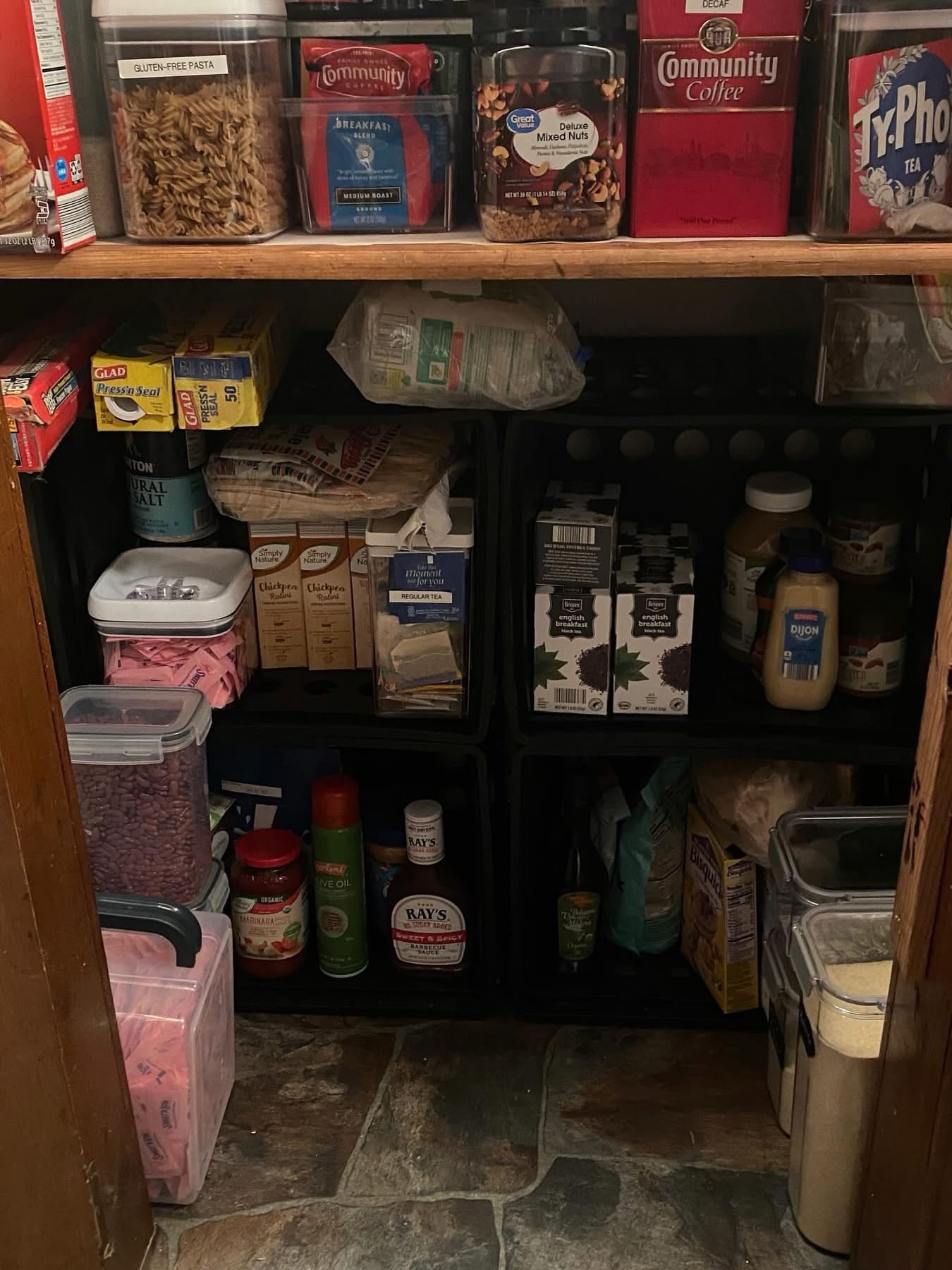
I opened a box of PG Tips tea to get a bag, I found what one of the “visitors” left. That box was trashed quickly. Now all the tea and coffee are locked into containers, along with dried beans and other vulnerable staples. Regular food packaging doesn’t cut it, and I’ve bought quite a few pantry storage containers for these things. I buy them as I find a need and utilize them. Always square and stackable to maximize the space we have.
Get in there and clean the whole thing well. Vacuum the shelves, wipe with vinegar, seal everything in airtight containers, and boom—pest-free zone. I used my Aldi steam cleaner to super-clean the entire pantry and shelves, including the corners, crevices and baseboards.
It was a great buy for $20, and it works great.
THEN we put the remaining supplies back in there with more room to keep them tidy.
Roaches: Max Force
The longer you ignore a pest problem, the worse it gets—exponentially. Especially with these “visitors.” If you find yourself dealing with la cucaracha in your pantry, or anywhere in your home, there is one thing that gets rid of them quickly: Max Force, either in gel form or as bait stations. You can get them in bags of 72 or smaller bags of 24. You may also find smaller quantities on eBay, as I have.
When I first moved to El Dorado Trace, I had a terrible time getting rid of them in the condo. Nothing worked, even the stuff the landlord provided. They were getting into the cat’s food dishes, too (the larger bag was kept in a large, sealed container in the pantry.) I stumbled on Max Force one day and couldn’t believe how fast it got rid of them. About two weeks, if I remember correctly. I replaced them every couple of years if I ever saw one again.
Highly Recommended
I’ve used both the gel and the bait stations here. A couple of years ago, I recommended it to someone in Houston who was having a terrible problem in an apartment building. She tried “everything,” she said, but she didn’t try this one. She bought some and put the gel out in her small kitchen. They were gone in short order.
Because she suspected it was a neighbor who was the reason for the problem, she gave him a tube but didn’t know if he ever used any. Not long after, she moved back to Clear Lake without that problem. But if she hadn’t purged the roaches out of her place and her stuff before she moved, they would have followed her back to Clear Lake. She was happy that was over.
The bait stations are for the smaller roaches and the gel is for both the smaller and larger ones. Make sure that whatever type you use, please keep it away from pets and children.
Four-Footed And Furry: The Mousie Pouches
You’d think with cats we wouldn’t have any, but occasionally they just walk right in and get comfortable. They get set up in a little corner of your place but don’t tell you. They build their little mousie superhighways and strut about unnoticed until one of the cats discovers them. You’ll find evidence when these little rodentia (I made up that word) have chewed through a plastic bag or two and ruined an expensive bag of something. But then a cat detects the presence of one, and the ancient predatory hunter DNA is activated until the little beast is caught and handled.
The Rodent Defense Force
Tab E. Cat was quite the mouser, and caught a total of 8 over the years.
He demands, I mean, loves to share my salmon and other carnivorous delights.
James has gone around the house and sealed up some potential mousie access points. But I guess they just walked in the house one day like they were at an Airbnb. TigerCat here has caught a bird and a mouse in here, but she let both go.
She’s just so darn cute, making herself comfortable.
The Fast And The Furious
A few weeks ago, she was chasing a mousie around in the office but not trying to stop it. The darn thing kept climbing around the place until it got away from her. Both were lightning fast, flying around the room. A couple of days later, the mousie appeared on the floor by my desk, on the plastic desk chair mat, suffering from rigor mortis. Someone, not sure who, caught it and wanted me to know it was gone. This was before I’d had any coffee. After considerable screaming (from me), James “handled” its final affairs, removing it from my desk area.
Later, James put out some of those sticky mouse traps with some dry cat food stuck on the middle. You know what happened? Nothing–the mousies ignored them all while TigerCat padded around, keeping watch on certain spots. One trap became stuck to the chair mat. We guess that our little orange cat flipped it over. The others were untouched.
Then, it happened again a couple of weeks ago—another mousie with rigor mortis appeared on the chair mat. James had gone to work, so I had to handle it myself. Without screaming this time, I procrastinated until after some coffee.
Social Media Steps In To Help
For a few months, I’ve seen animated ads for pouches that contain four ingredients to chase mousies away and let them know they’re not welcome. I’d considered ordering some, but there were more than a few comments and reviews warning others not to order from this company. Money was accepted, but no product arrived, ever, with nonexistent customer service.
Wary, I went to both the Amazon and Walmart websites where I found similar products. Two weeks ago, I went to Walmart here and bought some of these Victor mousie pouches with peppermint and tossed them in the back room in five places.
Well, the room smells good, but it was just until I received these more potent deterrents from Amazon. These large tablets contain four separate ingredients that create a stronger aromatherapy-based eviction notice for mousies. Fingers crossed, because I don’t want them hanging around, putting down roots and starting families in here. They arrived last week, and I’ll put them out soon throughout the house. Note: wear gloves with these. You remove these large pellets from the sealed bags, drop them into the little sachet bags and then toss them around. Fingers crossed.
Going Forward: Setting Yourself Up for the Long Haul
A refreshed pantry encourages seasonal swaps and keeps you efficient—whether you’re moving, downsizing, or just want easier days.
Grab some trash bags, your steam cleaner, (if you have one) some cleaning wipes or rags and carve out an afternoon to put your pantry back in order. Your future self, and your taste buds, will thank you.
A clean pantry isn’t just organized; it’s the foundation for healthier, happier living. And really—being able to find the celery salt when you need it makes cooking much easier, doesn’t it?
Long-Term Food Storage
After hauling all those long-outdated foods out to the garbage can, we’re promising ourselves that we won’t do that again. Just because it’s on sale doesn’t mean it’s a bargain if you throw it away. The total haul to the trash bin was two of those big black contractor bags. My estimate is about $500 of accumulated things bought over time, on sale for the day we needed them, but just never used. We were “saving it for a special occasion,” aka, the emergency that never happened.
Pantry management (if you want to call it that) is a process, not a one-and-done. Sure, it’s great to have a stocked pantry. But if you’re staring at stacks of foodstuffs you haven’t looked at in a long time, you need to find out what’s back there and get rid of the expired goods. You don’t want to find out the hard way that it went bad. (As I always say, I speak from experience.)
What About Emergencies?
Good question—and one I’ll cover in an upcoming blog post.
As a fashion designer I follow on Instagram says, “Summer is always coming.” Here on the Gulf Coast as well as the entire Atlantic coast, that includes Hurricane Season. We watch tropical activity long before it reaches the Gulf and closely once it does.
Sure, stocking up on canned and dried foods is a good idea right before an emergency. But will you be able to get everything you need right before it happens? Pictures of empty shelves and runs on supplies fill up social media feeds in the days before. But buy too early, and you’ll toss things out like we did. That’s where food made for long-term storage comes in.
These are from MaryJane’s Farm, and can be made with hot or cold water. More in the upcoming blog post.
We’ve tried a couple of brands recently and are confident that buying more of them is a good idea. After using a kettle on a generator and cooking on a camping stove, I’m good with it. More on this in the upcoming blog, because summer and hurricanes are indeed always in the future.
It Happened Again
Just a week or so ago, we had another two-day power outage. A big storm brought a late-season cold front, complete with high winds and plenty of rain. All that activity knocked out power all around the Northshore, not just our little rural enclave.
We quickly deployed the camping stove and the generator. James kept the fridge and freezer operating throughout the outage, and I went out for Wi-Fi, coffee, and some tacos when he went to work. We were fine, including the animals, and we had nearly everything we needed to live through it. Fortunately, we didn’t have to take cold showers, because the power returned just in time.
Before I set my laptop back up at home, I cleaned up my desk. It needed a good cleanup, too.
Future State
After eliminating two of the overstuffed milk crates, we can finally close the pantry door.
The bottom half of our pantry, stacked with black plastic milk crates to keep it neat.
Over time, I need to find a more storage containers for several things. For me, they must be square and stackable to optimize the space I have. Much as I prefer glass, I find that glass in the pantry can be problematic. Broken glass is a dangerous mess.
I’ve asked James about remodeling the pantry to something like this:
Source: DecoratedLife.com via Pinterest
Instead of having a few shelves across the entire space, why not put smaller shelves against the three walls and triple the available space? We took measurements while it was empty and put the paper on the fridge for. . .later. He smiles a little when I ask about doing this in the kitchen. I’m sure he’s going to get right on that.
I’m going to show you the top half of the pantry again. Note that there’s an entire foot of space at the top of the pantry above the goods that’s just sitting there unused. It’s wasted space that would be great to fully utilize.
The top half of the pantry, post-cleanout.
This “extra” space would be ideal for extras, larger items, and things we don’t use as often. The above design would make the additional storage feasible. But he’s having a little trouble wrapping his Navy-Seabee-construction brain around shelves along the walls and not across space as it is now. Putting a shelf across that top will make access difficult. That’s why the three-wall shelf design would be a much better option.
How about something a little different–and vegetarian? Here’s an awesome video of The Pointer Sisters singing a song I’ve never heard of called Save the Bones for Henry Jones. It’s an old clip, but the ladies look and sing fabulous here.
Why not keep moving while you’re cleaning?
In addition to a blog on long-term food storage, I’m looking for a few more good topics, a few more good recipes to share, and not waiting so long in between blogs. Let me know if there’s a topic you’d like me to cover. Meantime. . . .
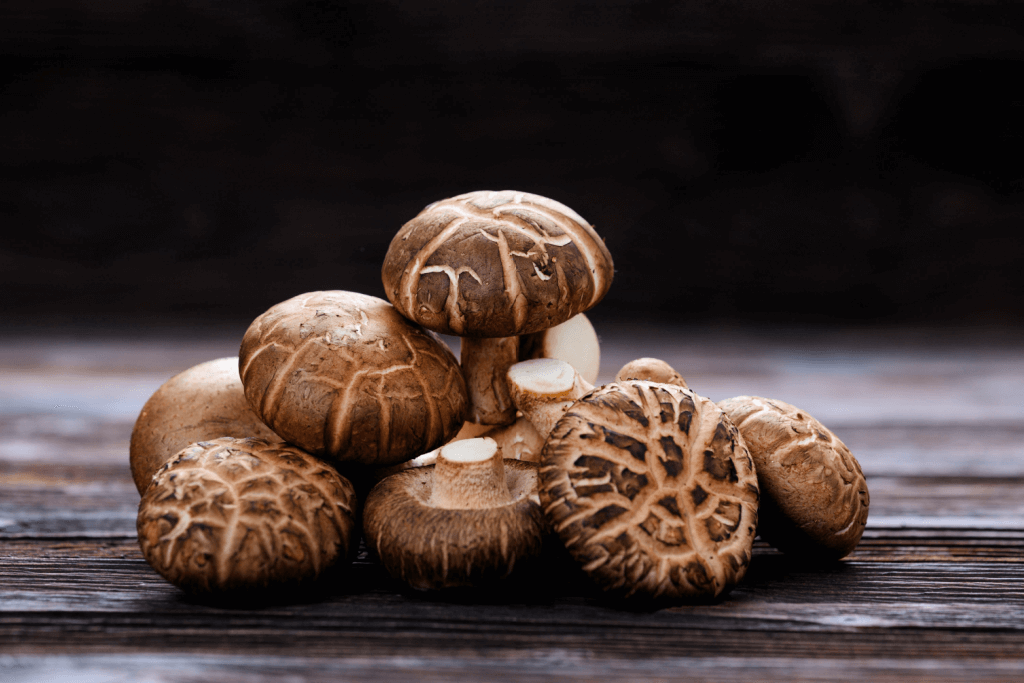
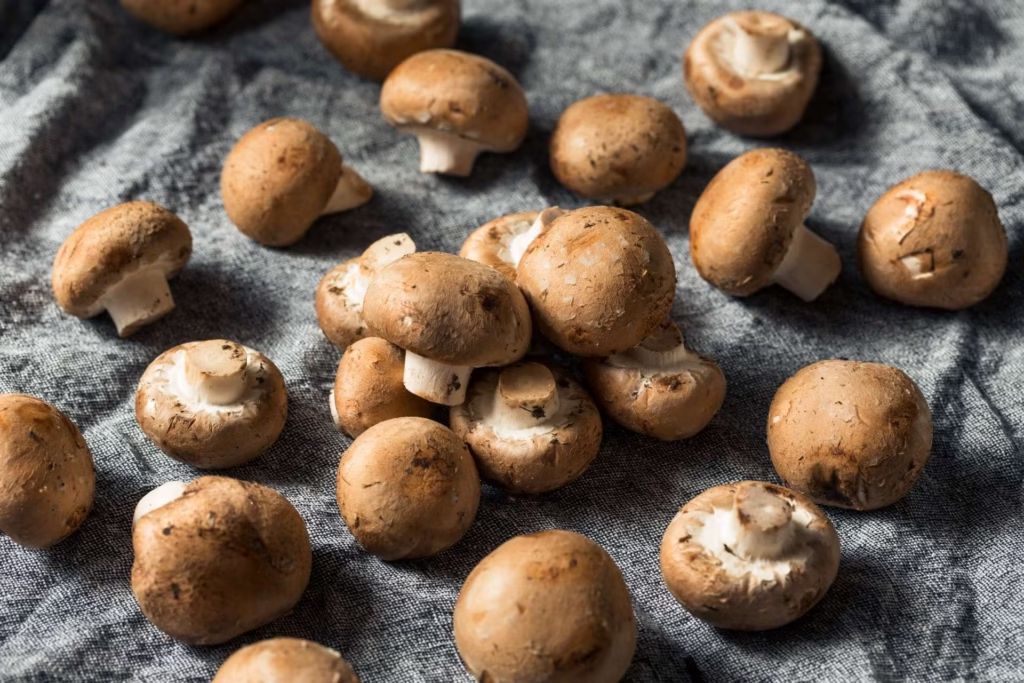
Do mushrooms get enough respect? Maybe they are now. Mushrooms are “having a moment” and are becoming the new “superfood du jour.” With some help from my BFF (ChatGPT), let’s dive into the mushroom patch.
It’s been a minute, and I apologize again. Things got away from me, as they often do here, and ten days went by. Now it’s the week of Thanksgiving: are you still making plans? Have you decided what to make yet? In our little neck of the woods, I was thrilled when the Lodge Cast Iron posted this one-pan Thanksgiving dinner on Instagram the other day. It’s greatly appreciated, and so far, it’s just James and me, anyway. (I think.) And it’s good for any time of year, too.
One thing that’s going to make it to our Turkey Day dinner is mushrooms, and I’ll share that recipe in this blog post with a printable version for you, too.
Are Mushroom-Based Foods the New Cauliflower? What to Try Now
Move over, cauliflower—there’s a new shapeshifter in town. And no, it’s not another vegetable trying to pretend it’s a pizza crust. It’s mushrooms. Yes, the humble fungi that used to be the sad, rubbery afterthought on a questionable slice of delivery or frozen pizza have reinvented themselves. Mushrooms are having a glow-up, a moment, a cultural reawakening, whatever you want to call it. And honestly? They deserve it, too.
Source: Google Images
If you’re into low-carb, keto, gluten-free, or just “please-don’t-make-me-eat-a-bowl-of-pasta” cooking, mushroom-based foods are about to feel like someone tossed you a culinary life raft. They’ve quietly crept into everything from faux noodles to snack chips, and people are searching for them like crazy. So let’s dig into why mushrooms are suddenly the new cauliflower, and which products and recipes are actually worth your time.
Why Mushrooms, and Why Now?
Cauliflower had its moment (several, actually). Rice, pizza crust, nachos, tortillas, mac and cheese—we owed a lot to that pale, unassuming hero. I like cauliflower, but for many people, there is one giant downside: it always tastes like cauliflower, no matter how much cheese you bury it under.
Mushrooms? Whole different story.
Source: Google Images
They’ve got:
Natural umami
A chewy, satisfying bite
Shockingly good versatility
Almost no carbs
No gluten, no dairy, no fuss
The ability to disappear into the background or be the star, depending on how you treat them
Plus, mushroom-based products aren’t pretending to be healthy food. They are a healthy food. Low-calorie, nutrient-dense, fiber-rich. They basically walk into the room wearing a quiet “I’m good for you” confidence without lecturing anyone.
The Rise of Mushroom-Based Alternatives
Here’s where the fun starts. Food companies have realized mushrooms can be turned into, well, almost anything.
And for those of us who want low-carb recipes that don’t taste like punishment, this is extremely good news.
1. Mushroom-Based Noodles
In my last post, I discussed shirataki noodles (which are sometimes blended with mushrooms now), but pure mushroom-based noodles are showing up everywhere. These aren’t mushy. They’re not spongy. They’re pleasantly chewy, neutral in flavor, and ready to soak up whatever sauce you throw at them.
They work beautifully in:
Casseroles
Keto pasta salads
Pad Thai riffs
Soups (they don’t disintegrate!)
Stir-fries
The magic, of course, is that mushrooms don’t have a strong flavor of their own. They act like little sponges (in the best possible way), soaking up garlic butter, tomato sauce, pesto, or Thai curry. Much like the hearts of palm and shirataki pastas, your sauce becomes the star. The noodles just show up and do their job without drama.
2. Mushroom “Rice.”
This isn’t quite as common yet as cauliflower rice, but give it a year. It’s already popping up in the low-carb world.
Mushroom rice has:
A firmer bite
A deeper savory flavor
Better performance with meals that need more texture (think jambalaya or burrito bowls)
Use it anywhere you’d use cauliflower rice, but especially in dishes where cauliflower’s water content has betrayed you one too many times. (Looking at you, cauliflower fried rice.)
3. Mushroom Snack Chips
I haven’t tried these yet, but I’m informed that these are dangerously good.
Where kale chips crumble if you look at them wrong, mushroom chips hold together, crisp beautifully, and still feel like a real snack. And they’re low-carb, which feels like a miracle, because some keto snacks taste like someone dared a food scientist to see how much erythritol a human can tolerate.
Try them:
With dip
Crushed over salads
Straight out of the bag while pretending you’re “just having a few.”
Now that I’ve discovered they exist, I’ll be on the lookout for them.
4. Mushroom-Based Meat Alternatives
You don’t have to be vegetarian or vegan to appreciate these. Mushrooms make a fantastic stand-in for meat because they actually chew like something substantial. Companies are starting to use them in crumbles, burgers, and even jerky. They work great for:
Low-carb tacos
High-protein salads
Quick throw-into-a-skillet weeknight dinners
Replacing ground meat in casseroles
Bonus: no soy (or soy overload), no mystery ingredients, no weird aftertaste. Will only try when James is not around, even though he likes mushrooms. If I unleash this on him without trying it myself first, much like the overnight oats incident, I’ll never hear the end of it.
How to Cook with Mushroom-Based Foods (Without Overthinking It)
Here’s the best part: mushrooms don’t ask for much. Give them heat, seasoning, and maybe a little fat, and they rise to the occasion. Portobellos, for instance, can be grilled like a burger:
Source: Google Images
When you’re using pre-made mushroom-based products, it gets even easier. A few no-fail tips:
Treat mushroom noodles like regular noodles. Heat them, sauce them, boom — done. No complicated prep. Just make sure your sauce is flavorful, because the noodles are basically blank slates.
Roast the mushroom rice for better flavor. Toss with oil, salt, and pepper; roast on a sheet pan at high heat. It brings out a nutty, almost toasty flavor you’ll love.
Season mushroom meat alternatives with a light touch. They’re tasty, but a dash of taco seasoning, garlic powder, or smoked paprika goes a long way. You can always add a little more if needed.
Don’t be afraid of browning. Color = flavor. Pale mushrooms are sad mushrooms. Cooking all the water out in just a little oil and/or butter really brings out the mushrooms’ flavor and character, and crisps them up if you cook them long enough.
Recipe: Mushroom Sausage Stuffing
With Thanksgiving this week, I decided to revisit this recipe from the late Suzanne Somers’ first book, Eat Great, Lose Weight, page 167. I haven’t made it in many years, and decided on it when I found fresh tarragon over the weekend in the Hammond Albertson’s. (James didn’t want to be seen buying mushrooms in our local Walmart.) It’s been years since I made it last, but it’s so good, and lots of tasty mushroom goodness.
Suzanne Somers
Mushroom Sausage Stuffing
A low-carb alternative to bread stuffing for your Thanksgiving dinner or anytime.
4cupscoarsely chopped shiitake and oyster mushroomsor regular white button mushrooms
Salt and freshly ground black pepper
½cupdry white wine
2tbspbutter
2 poundsspicy turkey sausage meat, removed from casings can also use non-spicy
1 bunchfresh tarragon leavesno stems
Method
Saute' the onions in olive oil over medium-low heat until caramelized, about 30 minutes.
Turn the heat up to medium-high and add the mushrooms. Saute' until the mushrooms are crisp around the edges, about 15 minutes. Season with salt and pepper.
Turn the heat to high and add the wine. Let the wine cook off for a couple of minutes, then lower the heat and simmer with the mushrooms for another 10 minutes. Stir in the butter 1 tablespoon at a time until combined. Remove from the heat and set aside.
In a large skillet, brown the sausage. When cooked through, about 5 to 7 minutes, add the mushroom mixture along with the tarragon and combine thoroughly.
If you don’t want to use wine, a little chicken or turkey broth would work. This “stuffing” doesn’t need to be cooked inside the bird, either. You could make this the night before and reheat it for dinner. Just know that caramelizing the onions and frying up the mushrooms does take some time, so plan accordingly.
Are Mushrooms Really Replacing Cauliflower?
Honestly? In many ways, yes.
Source: Google Images
Cauliflower gave us options, but mushrooms give us confidence. They do the job without making the entire dish taste like a cruciferous fog. They’re friendlier to beginners, easier to cook, and—dare we say it—more satisfying.
Plus, cauliflower had a long run. It deserves a rest. Let it retire peacefully into your favorite roasted veggie medley.
Five Mushroom-Based Products Worth Trying This Week
If you want to dip your toe into the mushroom pool (and by pool, I mean skillet), you can start here:
Mushroom-based noodles: Any brand. They all behave politely.
Mushroom jerky: Surprisingly addictive and great for low-carb snackers.
Mushroom broth: Swap it into soups and sauces for a savory punch.
Mushroom meat crumbles: Great for tacos, chili, or quick stir-fries, or just trying out.
Mushroom chips: Just buy two bags.
I’m keeping my eyes open locally for some of these myself, but haven’t seen any yet. There is also mushroom coffee, and there are devotees, but I’m not brave enough to try that one.
The Fungi Have Earned Their Crown
So yes, mushrooms absolutely might be the new cauliflower. They’re versatile, they’re easy, they play well with low-carb and keto cooking, and they don’t hijack the flavor of every dish they touch.
Mushrooms can play a part in your Thanksgiving dinner as well as dinner any night of the week. Last week we had our regular spaghetti, and I drained two small cans of mushroom pieces, fried them until they were crispy, and added them into the pan after the meat was finished browning. Simple and easy, he liked it, and we’ll do that again. You can also fry them like this, raw or canned, and add them into an omelette or scrambled eggs, too. Just get ready for the spattering, which you can mitigate with a splatter screen. (I need to find mine, it disappeared.)
For carnivores and vegetarians alike, mushrooms are a nice little addition to your repertoire that can either sit in the background or play a starring role.
Do you buy organic, or do you think it’s just marketing hype? It’s a big deal, and not the same as calling something “healthy” or “natural.” Organic food labeling laws are specific. Know the difference before you walk into the grocery store, so you know what you’re getting.
So I’m back with another “joint” blog post about an issue you may or may not think much about: organics. What is it, and why does it cost more?
Sometimes I buy organic things for one reason or another, especially if they’re on sale. Even though Aldi and Walmart have a fair selection of organic foods, they’re not something people buy often here. In Houston and other big cities, you’ll find more organic devotees. Over time, we’ve found some favorites, and a few happen to be organic. James, of course, is not impressed when I get anything organic, even if it’s something he will be consuming.
I’ve talked about organics before, but now I can’t find that blog. But never mind, let’s delve into this issue a little with some help from my new BFF.
Going Organic
Walk down nearly any grocery aisle and you’ll see it: that smug little green label whispering, I’m better than you.
Source: ChatGPT
“Organic” food has become the status symbol of the shopping cart. But what’s really behind that label—and what happens when brands stretch the truth? Spoiler: sometimes it ends with a lawsuit and a lot of PR damage control.
What “Organic” Really Means, Legally
Let’s start with the facts. “Organic” isn’t just a marketing term someone slapped on a granola bar after meditating. It’s defined and regulated by the USDA National Organic Program (NOP).
Use organic feed and humane practices for livestock
Be verified by a certified organic inspector
And the rules go deep—even the soil, seed sources, and processing methods are part of the certification process. This can include all manner of agricultural products, including plants and seeds. My plant-based hair color is also certified organic, but that’s not the main reason I buy it. The USDA has a series on its website called “Organic 101,” where the agency offers a wealth of information if you want to know more.
For products labeled “Made with Organic Ingredients,” the bar is lower (at least 70% organic content), but the claim still has legal teeth. So yes, there’s real meaning and real oversight behind that little green label.
Why People Pay More for Organic
I used to know someone in Houston who was more into organic than I was. She invited me (along with the guy I was seeing at the time) to a Sunday dinner with her parents, nice folks I’d met before. We were talking about something related to food related when her father said, “I don’t understand why you girls will pay an extra dollar for a can of cr*p because it says ‘organic’ on the label!” I didn’t know what to say, frankly, but our hostess, his daughter, just smiled at him. (We were in our late 40’s at the time.) Otherwise, it was a nice visit.
The late Suzanne Somers became a devotee of organic food after her original cancer diagnosis. After her passing in 2023, her husband, Alan Hamel, said that her adoption of organic food and a non-toxic lifestyle gave her many more years of life than she would have had otherwise.
Source: ChatGPT
Not everyone has that kind of situation. However, there are some legitimate reasons to spend extra on organic:
Reduced exposure to pesticides: This is especially important for children and pregnant women.
Environmental impact: Organic farming tends to improve soil health and biodiversity.
Animal welfare: Organic livestock receive more humane treatment, and routine antibiotics are not allowed.
Taste and freshness: Some people insist that organic produce tastes better, especially local or seasonal crops. That’s an individual preference, but people who have enjoyed something truly home-grown and not laden with synthetic pesticides know what that is.
In other words, you’re not just buying food, but also a philosophy. That philosophy comes at a premium, and that’s when things can get legally complicated.
The Gray Areas: “Natural,” “Healthy,” and “Clean”
Here’s where the halo slips. Terms like “natural,” “clean,” and “healthy” are basically the Wild West of food labeling.
“Natural” has no consistent FDA definition. It doesn’t mean organic, non-GMO, or chemical-free—only that the product didn’t magically appear in a lab.
“Healthy” is being redefined, but has historically been based on outdated fat/sugar ratios. Today, it could mean sugar-free, gluten-free, allergy-free, or free of a specific allergen like eggs, nuts, or corn.
“Clean” isn’t regulated at all. It’s marketing poetry, not science. Like “healthy,” it could mean the absence of a specific substance or ingredient.
And when those words get plastered across packaging, consumers often assume legal weight where none exists. (I’ve been stung a few times by stuff that had no business in my shopping cart.) That confusion has led to a line of class-action lawsuits that read like your pantry’s lineup.
Famous Food Label Lawsuits
A few big names learned the hard way that “creative labeling” can backfire:
Kashi (Kellogg’s): Sued for calling cereals “All Natural” despite containing synthetic and genetically modified ingredients. Settled for $4 million.
Wesson Oil: Claimed “100% Natural” while allegedly using genetically modified corn. The case dragged on for years before a settlement. (It ended in 2023.)
Kind Bars: Faced scrutiny for the word “healthy” due to fat content (mostly from nuts, but still a no-go under the old rules). In 2022, the company prevailed in a lawsuit over “natural” ingredients, and an appellate court agreed with the company. I have bought some of them primarily because they were gluten-free, but they do have some sugar.
None of these companies went to trial, but the settlements and bad press were a wake-up call. There’s a fine line between clever marketing and consumer deception. I’m all for free trade and capitalism, but not at the expense of truth in advertising. That’s why it’s important to understand what’s in the food you buy that you might believe to be healthier. Start by reading the labels (no matter what your significant other says).
How to Read Between the Labels
A few practical takeaways for your next grocery run:
“Organic” = USDA certified and inspected
“Made with organic ingredients” = still has standards, just looser
“Natural” = legally meaningless
“Clean” = just vibes, intending to indicate ingredients without toxins, wheat, gluten, or other undesirable additives.
Read the list of ingredients because they’ll tell you more than the buzzwords ever will. Like calling something “gluten-free,” which also has federal requirements, you should know what you’re getting with no surprises.
One Final Bite
Buying organic can be worth it, for your health, your family, and peace of mind. But don’t let a label do your thinking for you. “Organic” has legal standards, while “natural” has a marketing department.
Next time a product screams “All Natural!” in fancy script, remember, so are tobacco and arsenic.
Looking for a more fun topic for my next blog post. Until then: